


Wheat is one of the world's most important food crops, and achieving higher yields while maintaining soil health has become a major challenge for farmers. Continuous use of chemical fertilizers may provide quick results, but over time it can reduce soil fertility, affect microbial activity, and increase production costs.
This is where biofertilizers play a vital role. These naturally occurring microbial products help improve nutrient availability, encourage healthy root development, and restore the biological balance of the soil. As more farmers adopt sustainable farming methods, biofertilizers are becoming an essential part of modern wheat cultivation.
In this guide, you'll learn what biofertilizers are, how they work, their benefits for wheat farming, application methods, common mistakes to avoid, and expert recommendations for achieving healthier crops and better harvests.
What Are Biofertilizers for Wheat Farming?Biofertilizers are living microorganisms that naturally improve soil fertility by increasing the availability of essential nutrients to plants. Instead of directly supplying nutrients like chemical fertilizers, they help the soil release nutrients already present in the environment.
For wheat cultivation, biofertilizers improve nutrient uptake, encourage stronger root systems, and create healthier soil conditions that support consistent crop growth.
Common Types of Biofertilizers Used in Wheat Farming
1. Nitrogen-Fixing Biofertilizers
These beneficial bacteria convert atmospheric nitrogen into a form that wheat plants can easily absorb. This reduces the need for synthetic nitrogen fertilizers while supporting healthy vegetative growth.
2. Phosphate Solubilizing Bacteria (PSB)
Many soils contain phosphorus that remains unavailable to crops. PSB converts insoluble phosphorus into plant-available forms, promoting stronger roots and better grain development.
3. Potassium Mobilizing Bacteria
These microorganisms help release potassium from soil minerals, improving water regulation, disease resistance, and grain quality.
4. Plant Growth Promoting Rhizobacteria (PGPR)
PGPR stimulate root growth, improve nutrient absorption, and help plants tolerate environmental stress such as drought and nutrient deficiencies.
Why Biofertilizers Matter for Wheat
Healthy soil contains billions of microorganisms working together to support crop growth. Biofertilizers restore this natural biological activity, making wheat farming more productive and environmentally friendly.
How Do Biofertilizers Work?Biofertilizers improve crop performance by creating a healthier soil ecosystem rather than simply adding nutrients.
Here's how the process works:
Step 1: Application
Biofertilizers are applied through seed treatment, soil application, or drip irrigation depending on the farming method.
Step 2: Root Colonization
The beneficial microbes establish themselves around the wheat roots and begin interacting with the surrounding soil.
Step 3: Nutrient Conversion
The microorganisms convert unavailable nutrients into forms that wheat plants can absorb easily.
Examples include:
- Converting atmospheric nitrogen into usable nitrogen.
- Solubilizing fixed phosphorus.
- Mobilizing potassium and micronutrients.
Step 4: Improved Root Development
The microbes stimulate natural hormone production that encourages stronger and deeper root systems.
Step 5: Better Plant Growth
With improved nutrient uptake and stronger roots, wheat plants become healthier, greener, and more resistant to environmental stress.
Step 6: Higher Yield
Healthier plants generally produce better tillering, improved grain filling, and higher overall productivity.
Benefits of Biofertilizers for Wheat FarmingImproved Soil Fertility
Biofertilizers enhance microbial activity, improving the soil's biological health and maintaining fertility for future cropping seasons.
Better Nutrient Uptake
They increase the availability of nitrogen, phosphorus, potassium, and essential micronutrients, allowing wheat plants to absorb nutrients more efficiently.
Stronger Root Development
A healthy root system helps plants access water and nutrients more effectively, resulting in vigorous crop growth.
Reduced Chemical Fertilizer Requirement
Using biofertilizers can lower the dependence on chemical fertilizers, reducing farming costs while supporting sustainable agriculture.
Higher Wheat Yield
Improved nutrient availability leads to healthier crops, better grain filling, and increased harvests.
Improved Grain Quality
Balanced nutrition contributes to better grain weight, improved protein content, and enhanced overall crop quality.
Enhanced Stress Tolerance
Healthy microbial populations help wheat plants cope better with drought, nutrient stress, and changing environmental conditions.
Environmentally Friendly Farming
Biofertilizers reduce chemical runoff and help preserve soil biodiversity, making farming safer for future generations.
Applications of BiofertilizersAlthough highly beneficial for wheat, biofertilizers are widely used across many crops.
Wheat
Improves nitrogen availability, root development, and grain yield.
Paddy (Rice)
Supports vigorous growth while reducing chemical fertilizer usage.
Maize
Improves nutrient absorption and enhances overall productivity.
Soybean
Works with beneficial microbes to improve nitrogen fixation and crop health.
Cotton
Supports stronger root systems and healthier plant growth.
Vegetables
Enhances soil fertility while improving crop quality and yield.
Fruits
Promotes healthier root zones and long-term orchard productivity.
Step-by-Step Guide: How to Apply Biofertilizers in Wheat FarmingStep 1: Select the Right Biofertilizer
Choose a high-quality product suitable for wheat cultivation and your soil type.
Step 2: Prepare Seeds
Treat wheat seeds evenly with the recommended biofertilizer before sowing.
Step 3: Soil Application
Apply biofertilizers during land preparation or along with organic manure for better microbial establishment.
Step 4: Maintain Soil Moisture
Adequate moisture helps beneficial microorganisms survive and multiply.
Step 5: Avoid Excess Chemicals
Heavy chemical fertilizer or pesticide use immediately after application may reduce microbial effectiveness.
Step 6: Monitor Crop Growth
Observe root development, tillering, and overall plant health throughout the growing season.
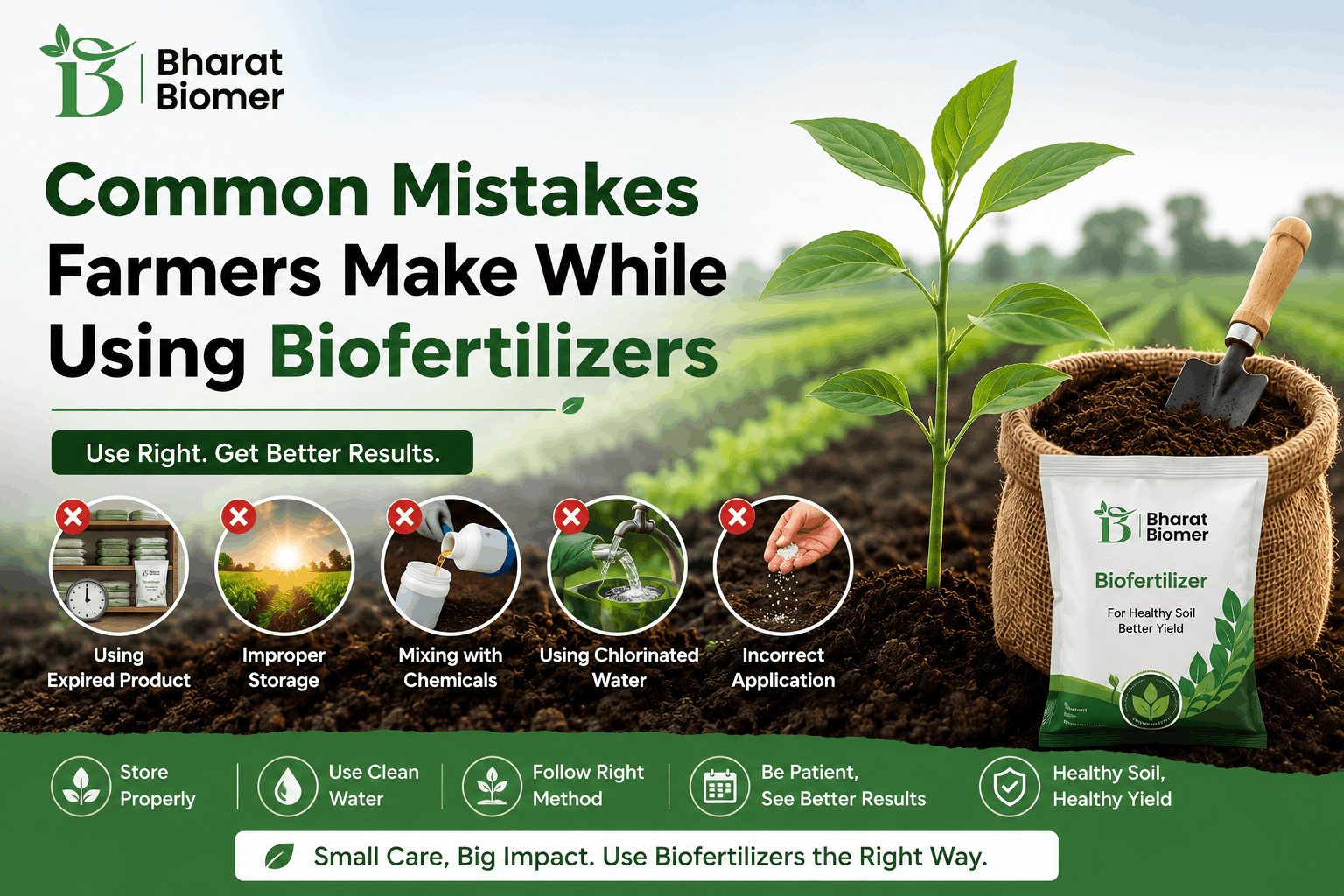
Common Mistakes to Avoid- Applying expired biofertilizers.
- Storing products in direct sunlight or high temperatures.
- Using incorrect dosage.
- Mixing biofertilizers with incompatible chemicals.
- Applying in extremely dry soil.
- Ignoring manufacturer recommendations.
- Expecting instant results instead of long-term soil improvement.
- Conduct regular soil testing before selecting biofertilizers.
- Combine biofertilizers with organic manure for improved effectiveness.
- Follow recommended application timing for maximum microbial activity.
- Maintain proper irrigation after application.
- Use certified, high-quality agricultural inputs from trusted manufacturers.
- Practice crop rotation to improve long-term soil health.
- Monitor field performance and adjust nutrient management accordingly.
The effectiveness of biofertilizers depends greatly on product quality. Farmers should choose products from trusted manufacturers that follow strict quality standards and scientific formulation processes.
Bharat Biomer Pvt. Ltd. develops biofertilizers, biopesticides, and plant growth solutions designed to improve soil health and support sustainable agriculture. Their products are formulated to help farmers achieve healthier crops while promoting environmentally responsible farming practices. When integrated into a balanced nutrient management program, quality biofertilizers can contribute to consistent wheat growth and long-term soil productivity.
ConclusionBiofertilizers are transforming modern wheat farming by improving soil fertility, enhancing nutrient availability, and supporting healthier crop growth. They not only help increase wheat productivity but also reduce dependence on chemical fertilizers, making farming more sustainable and cost-effective.
For farmers looking to improve long-term soil health and crop performance, choosing reliable agricultural solutions is essential. Bharat Biomer Pvt. Ltd. is committed to providing scientifically developed biofertilizers, biopesticides, and plant growth products that help farmers cultivate healthier crops while promoting sustainable agricultural practices. By integrating quality biofertilizers into your farming routine, you can build healthier soils, achieve better yields, and contribute to a more