
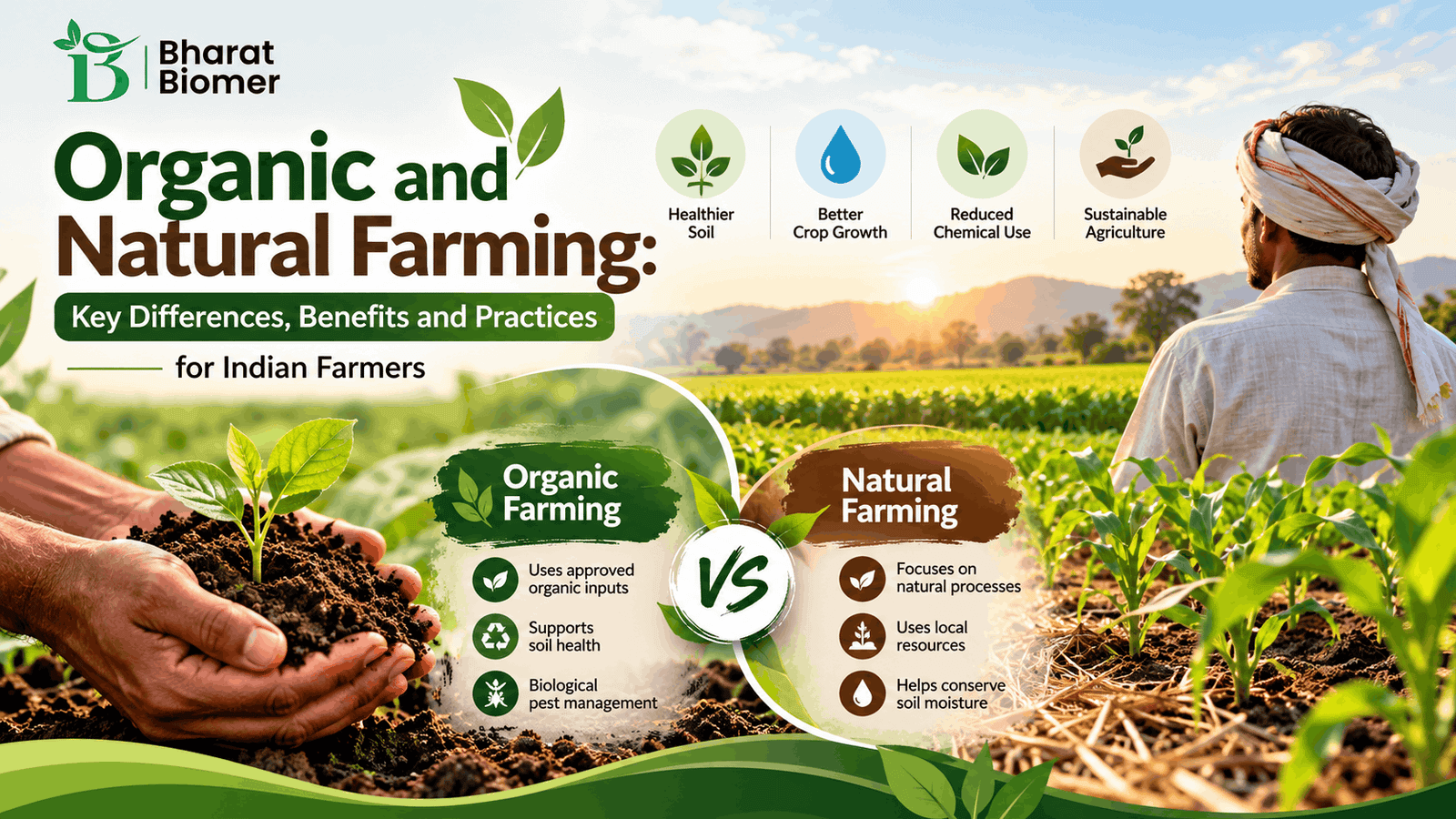
Agriculture in India is changing as farmers look for ways to maintain soil health, manage crop production costs and adopt more sustainable farming methods. Growing awareness about environmental protection and responsible food production has also increased interest in alternative agricultural practices.
Organic and Natural Farming are two approaches that encourage farmers to reduce dependence on synthetic agricultural inputs and pay greater attention to soil health and natural resources. Although both support more sustainable agriculture, they follow different principles and practices.
Understanding these differences can help farmers choose suitable methods according to their crops, soil conditions and farming requirements.
What Is Organic and Natural Farming?
Organic farming is an agricultural approach that focuses on using approved organic inputs and biological methods to manage soil fertility, pests and crop health. Common practices include composting, green manure, crop rotation and biological pest management. Certified organic farming also follows specific standards for permitted inputs and production methods.
Natural farming generally focuses on working with natural processes and reducing dependence on externally purchased agricultural inputs. Practices may include mulching, crop diversification, locally prepared biological inputs and maintaining soil cover.
Both approaches aim to support healthier agricultural ecosystems, but their methods and certification requirements can differ.
Key Differences Between Organic and Natural Farming
While both methods encourage sustainable agriculture, there are some important differences:
|
Basis |
Organic Farming |
Natural Farming |
|
Main approach |
Uses approved organic inputs and biological practices |
Emphasises natural processes and locally available resources |
|
Soil fertility |
Compost, green manure and permitted organic fertilisers |
Mulching, biomass recycling and biological activity |
|
Pest management |
Biological control and permitted organic pest-management inputs |
Preventive and ecological pest-management practices |
|
External inputs |
May use approved purchased organic inputs |
Generally aims to minimise purchased external inputs |
|
Certification |
Can follow recognised organic certification standards |
Certification and verification depend on the applicable framework |
The choice between these approaches depends on farm conditions, available resources, crop requirements and the market farmers want to serve.
6 Important Benefits of Natural Farming
One reason farmers explore natural methods is their potential to support long-term soil and farm management. Some key benefits of natural farming include:
-
Supports soil health: Mulching and the addition of organic matter can help improve soil structure and support beneficial soil organisms.
-
Encourages biological activity: Maintaining soil cover and using biological inputs can support a healthier soil ecosystem.
-
Promotes water conservation: Mulching can reduce direct soil evaporation and help conserve moisture.
-
Makes use of local resources: Farm residues and locally available materials can be used in certain natural farming practices.
-
Supports biodiversity: Crop diversification and ecological pest-management methods can encourage a more balanced farm environment.
-
Reduces dependence on certain external inputs: Suitable practices may help farmers reduce reliance on some purchased agricultural inputs over time.
Actual results depend on the crop, climate, soil conditions and correct implementation. Farmers should evaluate changes through field observations and soil testing.
Practical Organic Farming Examples for Indian Farmers
Farmers can adopt different practices depending on their crops and local conditions. Some useful organic farming examples include:
-
Rice: Using compost, crop rotation and suitable biological pest-management methods.
-
Vegetables: Applying well-decomposed compost, mulching and appropriate biological pest control.
-
Wheat: Including legumes in crop rotations and using green manure to support soil fertility.
-
Cotton: Combining crop rotation, organic matter management and integrated pest management.
-
Fruit crops: Using organic mulches, compost and suitable soil-management practices around trees.
These examples illustrate possible practices, not a guarantee of organic certification. Farmers following certified organic production must use inputs and methods permitted under the relevant standards.
Role of Biofertilizers in Sustainable Agriculture
Healthy soil depends on more than the nutrients added to it. Beneficial microorganisms also play an important role in nutrient cycling and interactions between soil and plants.
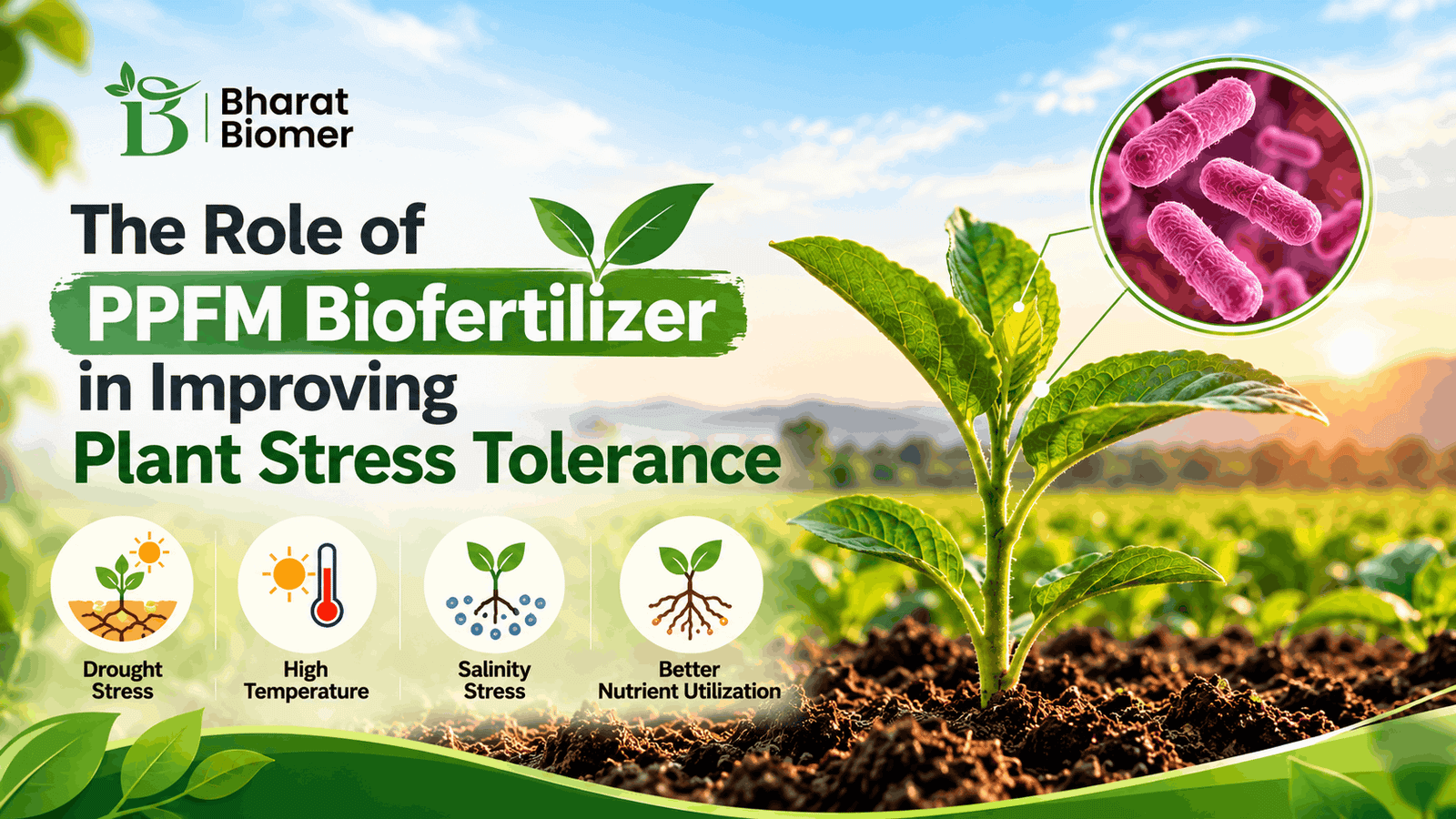
Biofertilizers contain selected beneficial microorganisms that can support processes such as nutrient availability and plant growth, depending on the microbial strain, formulation and crop conditions.
Bharat Biomer Pvt. Ltd. is dedicated to helping farmers achieve better crop growth through innovative and sustainable agricultural solutions. Its range of biofertilizers, biopesticides and plant growth products is designed to support soil health, crop development and eco-friendly farming practices.
Farmers should select products according to crop requirements and follow the manufacturer's recommended application instructions. Biofertilizers should complement a suitable crop nutrition programme rather than being treated as a universal replacement for fertilisers.
How Can Farmers Choose the Right Farming Approach?
Before adopting either method, farmers should consider their soil condition, crop type, water availability, local climate and access to suitable inputs. Starting with soil testing and introducing appropriate practices gradually can make the transition easier to evaluate.
It is also important to maintain proper records, monitor crop performance and seek advice from qualified agricultural experts or local extension services.
Conclusion
Organic and Natural Farming offer farmers different ways to work towards more sustainable agricultural practices. Both encourage better attention to soil health, biological processes and responsible resource management, but they are not identical.
By understanding their principles and selecting suitable methods, Indian farmers can make informed decisions for their fields. With the right crop-management practices and responsible use of biological solutions, sustainable agriculture can become a more practical part of long-term farm management.