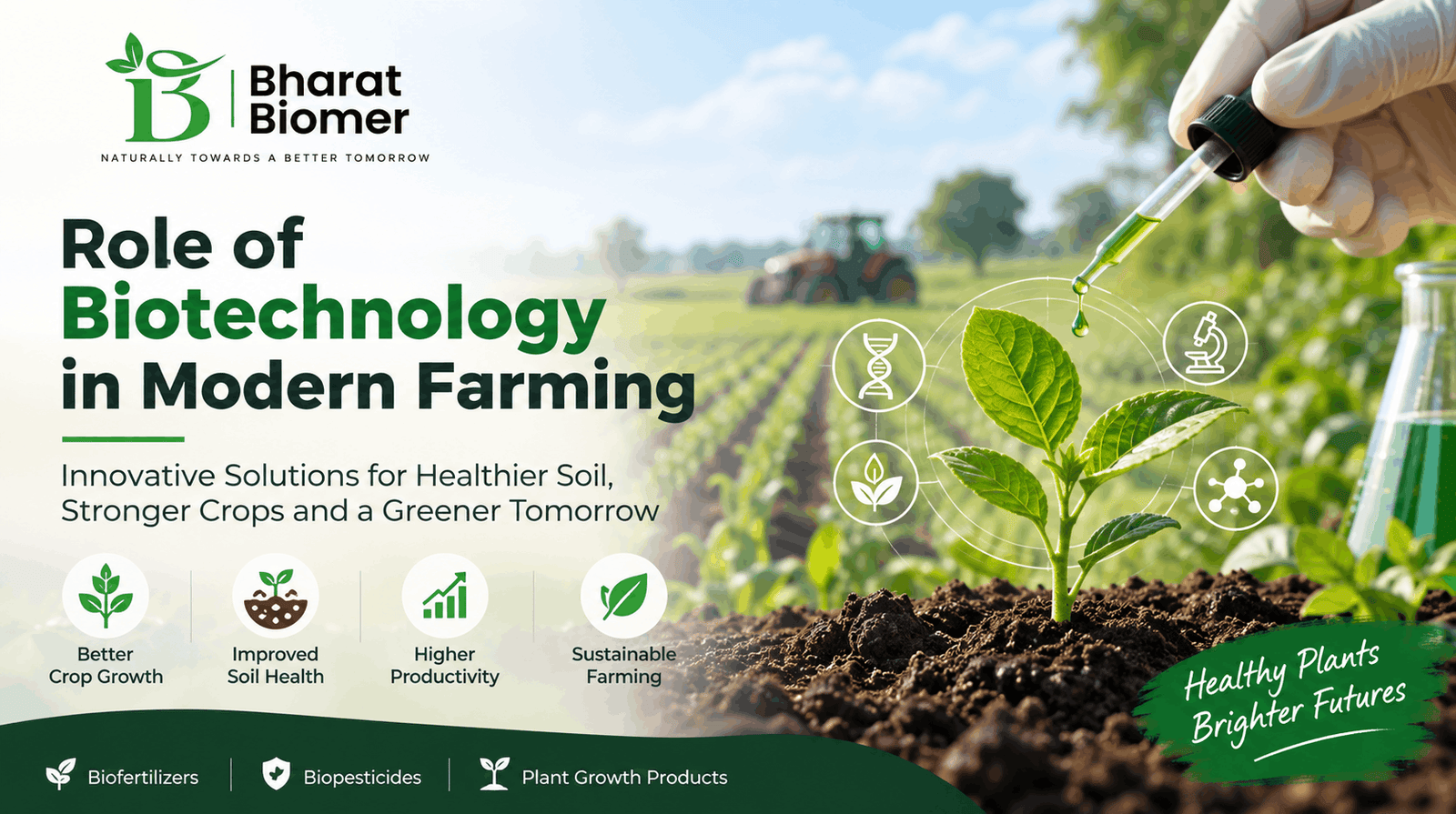



Farmers across India are looking for sustainable ways to improve crop productivity while reducing dependence on chemical fertilizers. Excessive use of chemical fertilizers can degrade soil health, reduce beneficial microbial activity, increase production costs, and impact long-term farm productivity. One of the most effective solutions is the use of biofertilizers.
Biofertilizers are living microorganisms that help plants absorb nutrients naturally, improve soil fertility, and support healthy crop growth. They are becoming an important part of modern agriculture and are widely used in organic farming systems.
Why Reduce Chemical Fertilizer Usage?
Chemical fertilizers provide nutrients quickly, but continuous and excessive application can create several challenges:
-
Decline in soil fertility over time
-
Reduced microbial activity in soil
-
Increased production costs
-
Nutrient imbalance in crops
-
Environmental pollution and water contamination
By integrating biofertilizers into farming practices, farmers can reduce chemical fertilizer dependency while maintaining healthy crop yields.
How Biofertilizers Help Farmers
Biofertilizers contain beneficial microorganisms that naturally improve nutrient availability to plants. These microbes help fix atmospheric nitrogen, solubilize phosphorus, stimulate root growth, and improve nutrient uptake.
Some major benefits include:
-
Better soil health and microbial activity
-
Improved root development
-
Enhanced nutrient absorption
-
Increased crop productivity
-
Better stress tolerance during drought and temperature fluctuations
-
Reduced fertilizer costs
-
Environment-friendly farming practices
This is one of the main reasons why biofertilizers are gaining popularity among farmers adopting organic farming ideas and sustainable cultivation methods.
Role of Biofertilizers in Organic Farming
Organic farming focuses on maintaining soil fertility through natural inputs instead of synthetic chemicals. Farmers practicing different types of organic farming often use biofertilizers as a key nutrient source.
Common types of organic farming include:
-
Pure Organic Farming
-
Integrated Organic Farming
-
Natural Farming
-
Biodynamic Farming
-
Sustainable Organic Farming
In all these approaches, biofertilizers help improve soil biological activity and support long-term agricultural productivity.
Gulabi Shakti — PPFM Liquid Biofertilizer
Among the innovative biofertilizer solutions available today, Gulabi Shakti PPFM Liquid Biofertilizer from Bharat Biomer Pvt. Ltd. offers a powerful way to enhance crop growth naturally.
The product contains live beneficial bacteria:
-
Methylobacterium symbioticum
-
Methylobacterium extorquens
with a minimum population of 1×10⁸ CFU/ml.
These beneficial bacteria produce natural plant growth-promoting substances such as:
-
Cytokinins
-
Auxins (IAA)
-
Gibberellins
These compounds help improve seed germination, root development, nutrient absorption, and plant stress tolerance.
Key Benefits of Gulabi Shakti
-
Promotes natural plant growth
-
Strengthens root systems
-
Supports faster and uniform seed germination
-
Improves nutrient uptake from soil and leaves
-
Enhances drought and temperature stress tolerance
-
Increases disease resistance
-
Improves crop quality and nutritional value
-
Supports sustainable farming practices
The product is suitable for cereals, pulses, vegetables, horticultural crops, fruits, and spices, making it a versatile solution for different farming systems.
Carrier Based Biofertilizer vs Liquid Biofertilizer
Farmers often compare carrier based biofertilizer products with liquid biofertilizers.
Carrier based biofertilizers use materials such as peat, lignite, or compost as carriers for microbial cultures. They have been widely used for many years and are effective when properly stored and applied.
Liquid biofertilizers, however, offer certain advantages:
-
Higher microbial population
-
Longer shelf life
-
Easy application through foliar spray and drip irrigation
-
Better survival of beneficial microbes
-
Uniform distribution across crops
Products like Gulabi Shakti represent the next generation of biofertilizer technology that helps farmers achieve better results with easier application methods.
Practical Tips to Reduce Chemical Fertilizers
Farmers can gradually reduce chemical fertilizer usage by following these practices:
1. Combine Biofertilizers with Organic Inputs
Use biofertilizers along with farmyard manure (FYM), compost, or vermicompost to improve nutrient availability.
2. Improve Soil Organic Matter
Healthy soil with higher organic content naturally supports microbial growth and nutrient cycling.
3. Follow Soil Testing
Apply fertilizers based on actual crop requirements instead of routine application schedules.
4. Use Crop-Specific Biofertilizers
Choose suitable biofertilizer products according to crop type and growth stage.
5. Adopt Integrated Nutrient Management
Combine organic inputs, biofertilizers, and balanced fertilizer application to achieve maximum efficiency.
Benefits of Organic Farming
The growing popularity of biofertilizers is closely connected with the benefits of organic farming, including:
-
Improved soil fertility
-
Better soil structure
-
Reduced chemical residue in food
-
Enhanced biodiversity
-
Lower environmental pollution
-
Better water retention
-
Sustainable crop production
-
Improved farmer profitability over time
-
Healthier ecosystems
-
Long-term agricultural sustainability
These benefits make organic and bio-based farming approaches increasingly attractive to modern farmers.
Conclusion
Reducing chemical fertilizer use does not mean sacrificing crop productivity. By integrating biofertilizers into farming practices, farmers can improve soil health, reduce production costs, and support sustainable agriculture.
Solutions such as Gulabi Shakti — PPFM Liquid Biofertilizer from Bharat Biomer Pvt. Ltd. provide beneficial microorganisms that help crops absorb nutrients more efficiently, tolerate stress, and achieve healthy growth naturally.
As more farmers explore sustainable agriculture and innovative organic farming ideas, biofertilizers will continue to play a crucial role in building productive, profitable, and environmentally responsible farming systems.