

Vegetable farming requires healthy soil, balanced nutrition, and sustainable cultivation practices to achieve high yields and quality produce. However, continuous use of chemical fertilizers can gradually reduce soil fertility and microbial activity. This is why many farmers are adopting sustainable and eco-friendly solutions such as biofertilizers.
Biofertilizers are living microorganisms that improve nutrient availability in the soil and help plants absorb essential nutrients naturally. They play a key role in modern agriculture and are becoming increasingly popular among farmers looking for effective organic farming ideas and sustainable crop production methods.
What Are Biofertilizers?
Biofertilizers are biological products that contain beneficial microorganisms such as bacteria and fungi. These microorganisms colonize the root zone and enhance plant growth by improving nutrient availability and soil health.
Unlike chemical fertilizers that directly supply nutrients, biofertilizers work naturally by converting nutrients into forms that plants can easily absorb. This makes them an important component of environmentally responsible agriculture.
Benefits of Biofertilizers for Vegetables
1. Improve Nutrient Availability
One of the biggest advantages of biofertilizers is their ability to increase nutrient availability. Nitrogen-fixing bacteria help convert atmospheric nitrogen into a usable form, while phosphate-solubilizing bacteria release phosphorus trapped in the soil. This ensures that vegetable crops receive essential nutrients throughout their growth cycle.
2. Enhance Soil Health
Healthy soil is the foundation of productive farming. Biofertilizers increase beneficial microbial activity, improve soil structure, and promote organic matter decomposition. Over time, they help restore soil fertility and support long-term agricultural sustainability.
3. Promote Strong Root Development
A healthy root system allows plants to absorb more nutrients and water. Biofertilizers encourage root growth and development, helping vegetable crops establish quickly and grow vigorously. Strong roots also improve the plant's ability to tolerate environmental stress.
4. Increase Crop Yield and Quality
Farmers often experience improved yields and better-quality vegetables when biofertilizers are used correctly. Enhanced nutrient uptake leads to healthier plants, improved flowering, and better fruit development. The result is higher marketable produce and improved profitability.
5. Reduce Dependence on Chemical Fertilizers
As fertilizer costs continue to rise, many farmers are looking for cost-effective alternatives. Biofertilizers help reduce the requirement for chemical fertilizers while maintaining crop productivity. This not only lowers production costs but also supports sustainable farming practices.
6. Support Environment-Friendly Agriculture
Among the major benefits of organic farming, environmental protection is one of the most important. Biofertilizers reduce chemical runoff, minimize soil pollution, and help maintain ecological balance. Their use contributes to cleaner and healthier agricultural systems.
PPFM-Based Biofertilizer for Vegetable Crops
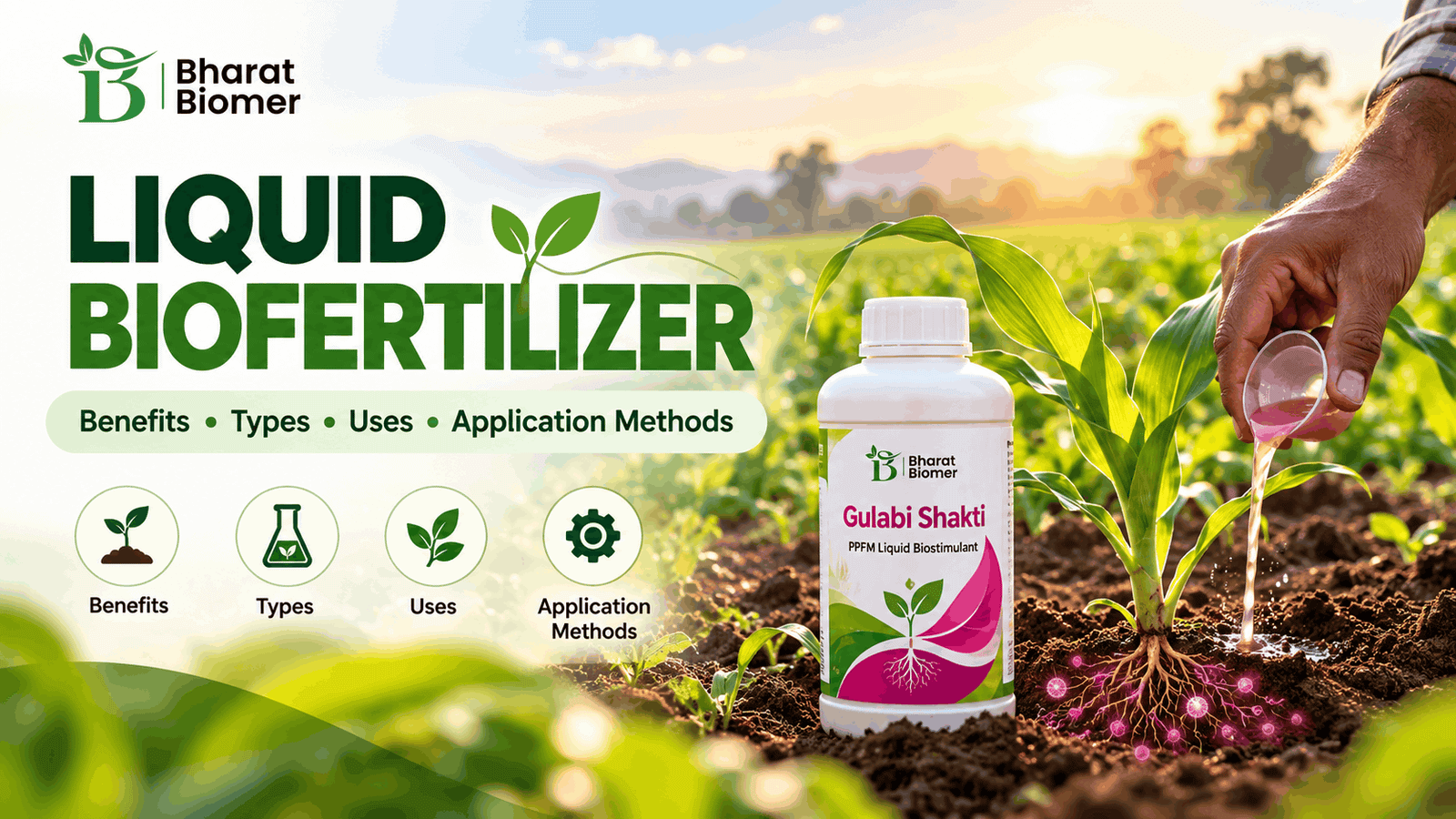
For farmers looking to improve vegetable crop growth, nutrient absorption, and stress tolerance, Gulabi Shakti PPFM Liquid can be a valuable addition to their farming practices.
Gulabi Shakti is a liquid biostimulant containing live beneficial bacteria, Methylobacterium symbioticum and Methylobacterium extorquens (minimum 1×10⁸ CFU/ml). These microorganisms help produce natural plant growth hormones such as Cytokinins, Auxins (IAA), and Gibberellins, which support healthy crop development.
Key Benefits of Gulabi Shakti
-
Promotes natural plant growth and stronger root development.
-
Improves nutrient absorption from soil and foliar applications.
-
Supports faster and uniform seed germination.
-
Enhances crop tolerance against drought, temperature fluctuations, and salt stress.
-
Helps improve plant health and disease resistance.
-
Contributes to better crop quality and nutritional value.
-
Contains naturally occurring live beneficial bacteria that support sustainable agriculture.
Suitable Vegetable Crops
Gulabi Shakti can be used in a wide range of vegetable crops, including:
-
Tomato
-
Chilli
-
Brinjal
-
Potato
-
Onion
-
Cabbage
-
Other vegetable crops
When used as part of an integrated nutrient management program, biofertilizers such as Gulabi Shakti can help farmers improve crop performance while supporting long-term soil health and sustainable vegetable production.
Common Types of Biofertilizers Used in Vegetables
Several types of biofertilizers are commonly used in vegetable cultivation:
-
Azotobacter and Azospirillum: Help fix atmospheric nitrogen and promote vegetative growth.
-
Phosphate Solubilizing Bacteria (PSB): Increase phosphorus availability for plant growth.
-
Potassium Mobilizing Bacteria: Improve potassium uptake and crop quality.
-
Mycorrhizal Fungi: Enhance nutrient absorption and root development.
These biofertilizers can be used in crops such as tomato, chilli, brinjal, cabbage, cauliflower, cucumber, and other vegetables.
Application Methods of Biofertilizers
To achieve the best results, biofertilizers should be applied correctly.
Seed Treatment
Seeds can be coated with biofertilizers before sowing. This allows beneficial microorganisms to establish around the roots from the early growth stage.
Root Dip Treatment
Vegetable seedlings can be dipped in a biofertilizer solution before transplanting. This method is widely used for crops like tomato, chilli, cabbage, and cauliflower.
Soil Application
Biofertilizers can be mixed with compost or farmyard manure and applied directly to the soil. This improves microbial activity and nutrient availability throughout the field.
Best Practices for Maximum Results
To maximize the effectiveness of biofertilizers, farmers should:
-
Purchase products from trusted manufacturers.
-
Store products in a cool and dry place.
-
Apply recommended doses only.
-
Use biofertilizers along with organic matter such as compost.
-
Maintain adequate soil moisture after application.
-
Avoid mixing biofertilizers directly with strong chemical pesticides or fungicides.
Following these practices helps beneficial microorganisms survive and perform effectively in the soil.
Conclusion
Biofertilizers are an effective and sustainable solution for improving vegetable crop productivity while maintaining long-term soil health. They help enhance nutrient availability, support stronger root development, improve soil fertility, and reduce reliance on chemical fertilizers. As farmers increasingly adopt sustainable agricultural practices and explore innovative organic farming ideas, biofertilizers continue to play a vital role in achieving healthier crops and better yields.
By using biofertilizers as part of an integrated farming approach, growers can benefit from improved crop performance while contributing to environmentally responsible and sustainable agriculture.