
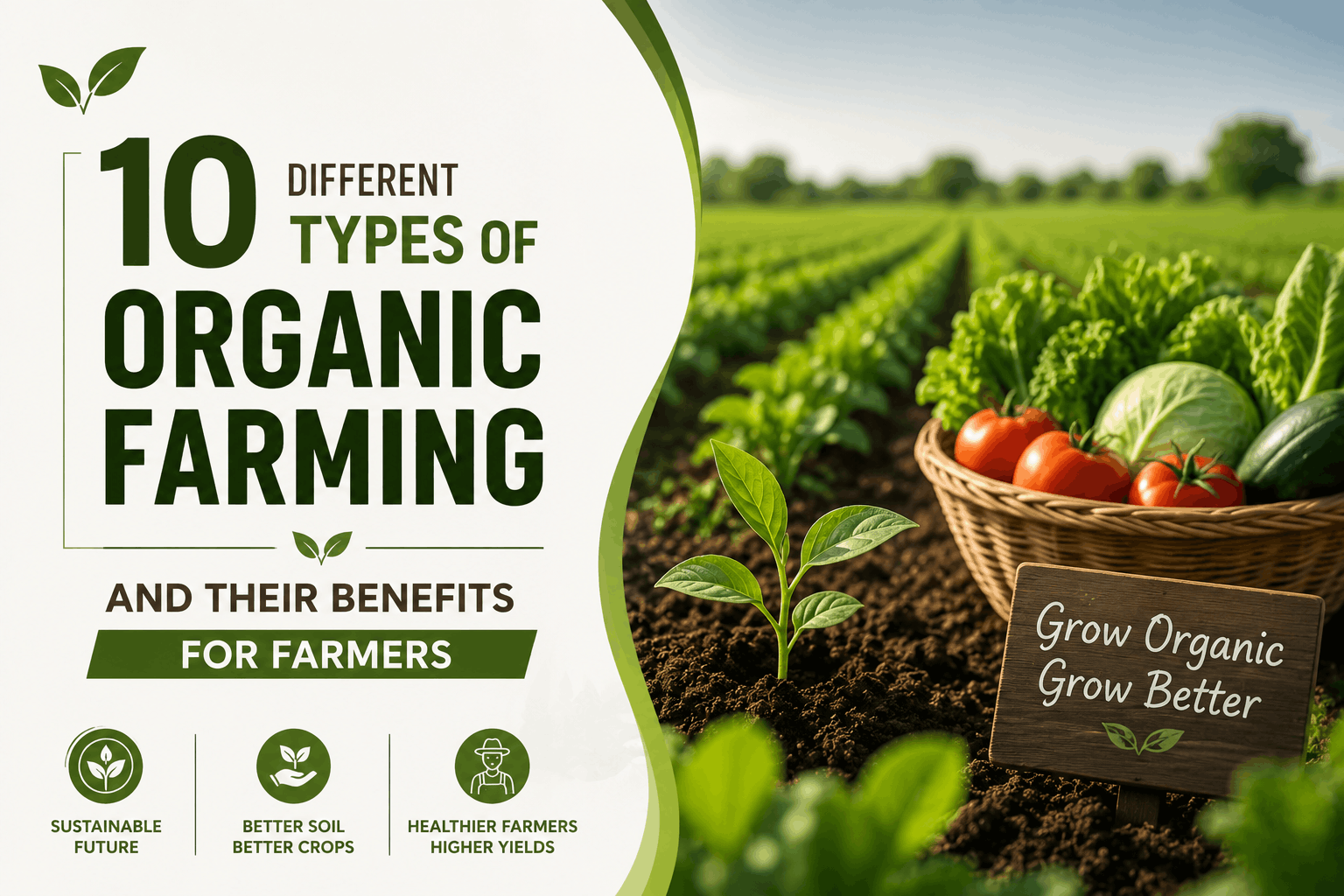
As awareness of sustainable agriculture continues to grow, more farmers are turning toward organic practices to improve soil fertility, reduce chemical dependency, and produce healthier crops. Understanding the different Types of Organic Farming can help farmers choose the most suitable approach based on their land, crops, and long-term goals.
Organic farming focuses on working with nature rather than against it. By using natural inputs, biological solutions, and eco-friendly farming techniques, farmers can improve productivity while protecting the environment. In this guide, we'll explore the most common Types of Organic Farming and the benefits they offer to modern agriculture.

What Is Organic Farming?
Organic farming is an agricultural system that relies on natural processes, organic inputs, and biological methods to maintain soil fertility and crop health. Instead of depending heavily on synthetic fertilizers and pesticides, organic farming promotes sustainable practices that support long-term agricultural productivity.
One of the key advantages of organic farming is its ability to improve soil health while producing safe and nutritious crops.
Why Farmers Are Choosing Organic Farming
The demand for organic products is increasing worldwide. Farmers are adopting different Types of Organic Farming because they help:
- Improve soil fertility naturally
- Reduce environmental pollution
- Enhance crop quality
- Increase biodiversity
- Lower dependence on chemical inputs
- Promote sustainable agriculture
Let's explore the most widely used Types of Organic Farming practiced today.
1. Pure Organic Farming
Pure organic farming completely avoids synthetic chemicals, fertilizers, and pesticides. Farmers use compost, green manure, biofertilizers, and natural pest management techniques to maintain crop health.
Benefits:
- Improves soil fertility
- Produces chemical-free crops
- Supports environmental sustainability
2. Integrated Organic Farming
Integrated organic farming combines crops, livestock, composting, and other agricultural activities into a single farming system. Waste from one activity becomes a resource for another.
Benefits:
- Maximizes farm efficiency
- Improves resource utilization
- Enhances overall farm profitability
Among the various Types of Organic Farming, integrated farming is considered highly sustainable.
3. Natural Farming
Natural farming focuses on minimal human intervention and encourages natural ecological processes. Farmers avoid synthetic inputs and often use locally available resources.
When comparing organic vs natural farming, both promote sustainability, but natural farming places greater emphasis on self-sustaining ecosystems and minimal external inputs.
Benefits:
- Lower production costs
- Improved soil biodiversity
- Reduced environmental impact
4. Biodynamic Farming
Biodynamic farming is an advanced form of organic agriculture that treats the farm as a living ecosystem. It follows specific agricultural calendars and uses natural preparations to improve soil and crop health.
Benefits:
- Enhanced soil vitality
- Better nutrient cycling
- Increased biodiversity
5. Permaculture Farming
Permaculture farming focuses on designing agricultural systems that mimic natural ecosystems. It integrates crops, trees, water management, and livestock into a sustainable farming model.
Benefits:
- Long-term sustainability
- Efficient land use
- Improved ecosystem balance
6. Agroforestry
Agroforestry combines trees with crops or livestock on the same land. This method improves soil structure while providing additional income opportunities.
Benefits:
- Reduced soil erosion
- Improved moisture retention
- Additional farm income
7. Vermiculture Farming
Vermiculture involves the use of earthworms to convert organic waste into nutrient-rich vermicompost.
Benefits:
- Improves soil health
- Enhances microbial activity
- Provides high-quality organic fertilizer
This method is often used alongside other Types of Organic Farming to boost soil fertility naturally.
8. Green Manure Farming
Green manure farming involves growing specific crops and incorporating them into the soil before maturity to improve organic matter content.
Benefits:
- Increases soil nutrients
- Improves soil structure
- Enhances water retention
9. Crop Rotation Farming
Crop rotation is a practice where different crops are grown sequentially on the same land to maintain soil fertility and reduce pest pressure.
Benefits:
- Prevents nutrient depletion
- Reduces pest infestations
- Improves soil productivity
Many successful Types of Organic Farming rely on crop rotation as a core practice.
10. Biological Farming
Biological farming emphasizes soil biology and microbial activity. Farmers use biofertilizers, biopesticides, and organic inputs to support healthy crop growth.
Benefits:
- Improves nutrient availability
- Strengthens root development
- Supports sustainable farming practices
How to Choose the Right Type of Organic Farming
Selecting the best Types of Organic Farming depends on several factors, including:
- Farm size
- Soil condition
- Climate
- Water availability
- Crop selection
- Market demand
Farmers should evaluate their resources and long-term objectives before choosing a farming method.
The Role of Organic Farming Services in Modern Agriculture
Today, many farmers benefit from professional organic farming services that provide guidance on soil management, crop nutrition, pest control, and sustainable farming practices. These services help farmers transition to organic agriculture more effectively while improving productivity and profitability.
Why Bharat Biomer Supports Organic Farming
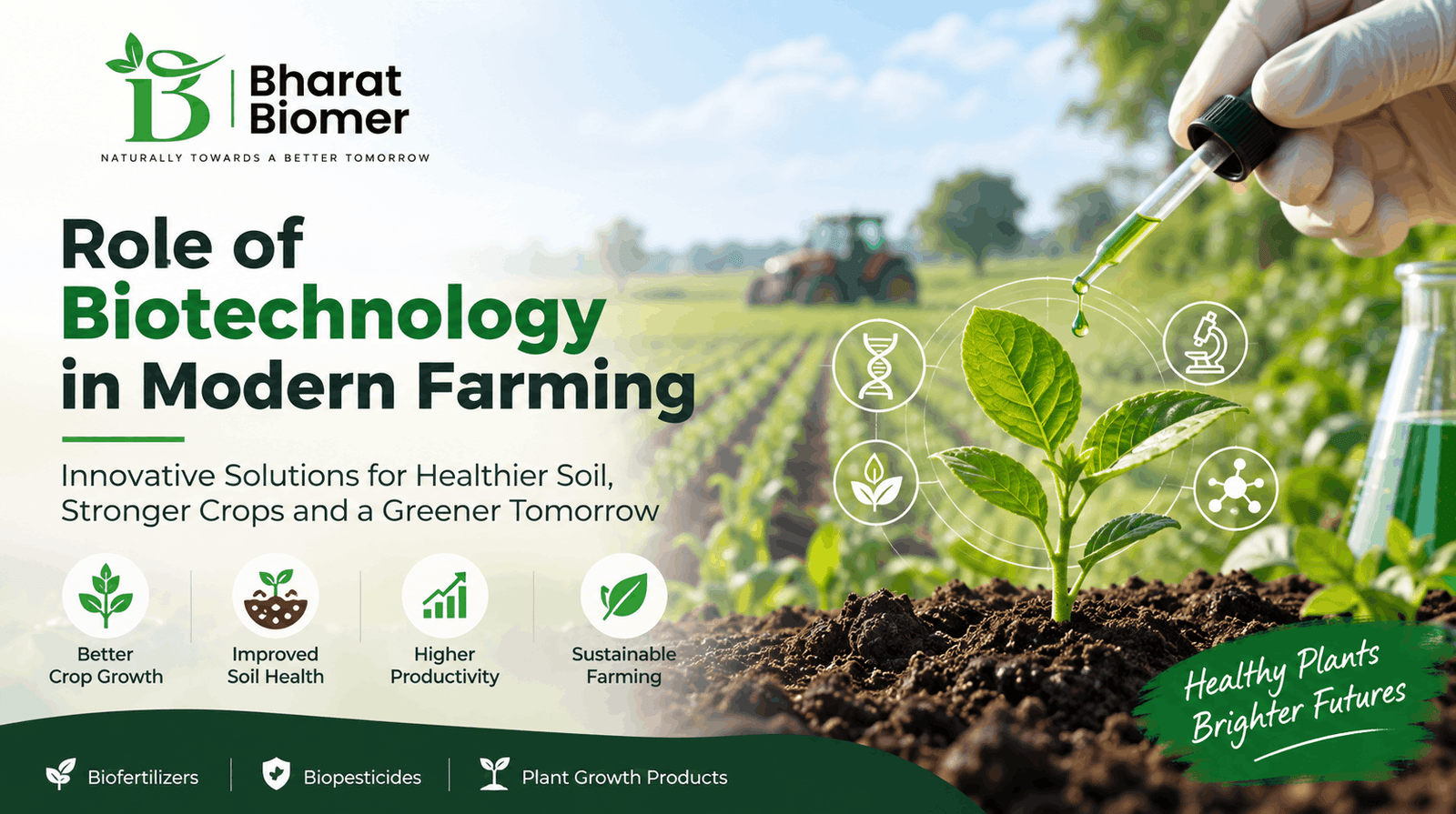
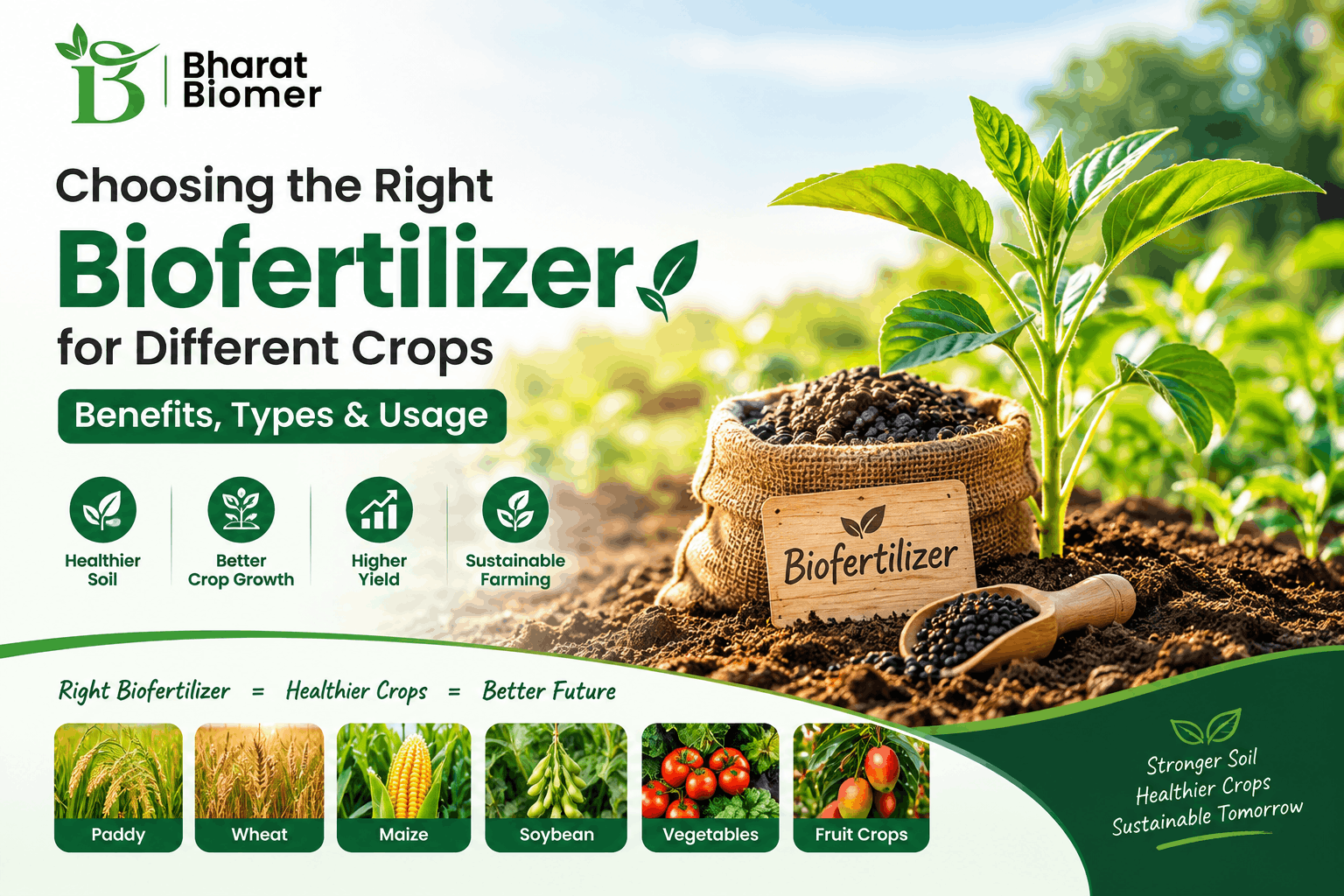
At Bharat Biomer Pvt. Ltd., we believe that sustainable agriculture begins with healthy soil and biological solutions. Our scientifically developed biofertilizers, biopesticides, and plant growth products help farmers adopt eco-friendly farming practices while improving crop performance.
Whether you're exploring different Types of Organic Farming or looking to improve soil fertility naturally, Bharat Biomer offers innovative solutions designed to support long-term agricultural success.
Our commitment to sustainable farming helps farmers reduce chemical dependency, improve productivity, and build healthier agricultural ecosystems for future generations.
Conclusion
Understanding the various Types of Organic Farming is essential for farmers who want to adopt sustainable agricultural practices and improve long-term productivity. From pure organic farming and biodynamic farming to agroforestry and biological farming, each method offers unique benefits depending on farming goals and environmental conditions.
As the demand for sustainable agriculture continues to rise, farmers who embrace organic practices can benefit from healthier soils, improved crop quality, and greater environmental sustainability. By combining the right farming methods with trusted biological solutions from companies like Bharat Biomer, farmers can achieve better yields while protecting the land for years to come.