


Biofertilizers are becoming an important part of modern agriculture. They help improve soil fertility, support healthy plant growth, and reduce dependence on chemical fertilizers. As more farmers adopt sustainable farming practices and explore different types of organic farming, the use of biofertilizers continues to grow.
However, many farmers do not get the expected results from biofertilizers because of a few common mistakes during storage, handling, or application. Since biofertilizers contain living microorganisms, they need proper care and usage to work effectively. When used correctly, they can improve nutrient availability, support soil microbial activity, and contribute to better crop productivity.
In this blog, we will discuss the most common mistakes farmers make while using biofertilizers and how they can avoid them.
What Are Biofertilizers?
Biofertilizers are products that contain beneficial microorganisms which help plants absorb nutrients naturally. These microorganisms improve soil fertility by fixing nitrogen, solubilizing phosphorus, mobilizing potassium, and enhancing nutrient uptake. Biofertilizers play an important role in sustainable agriculture and are widely used in various organic farming types.
As farmers learn more about the types of organic farming, biofertilizers are becoming a preferred choice for maintaining healthy soil and improving crop performance.
Common Mistakes Farmers Make While Using Biofertilizers
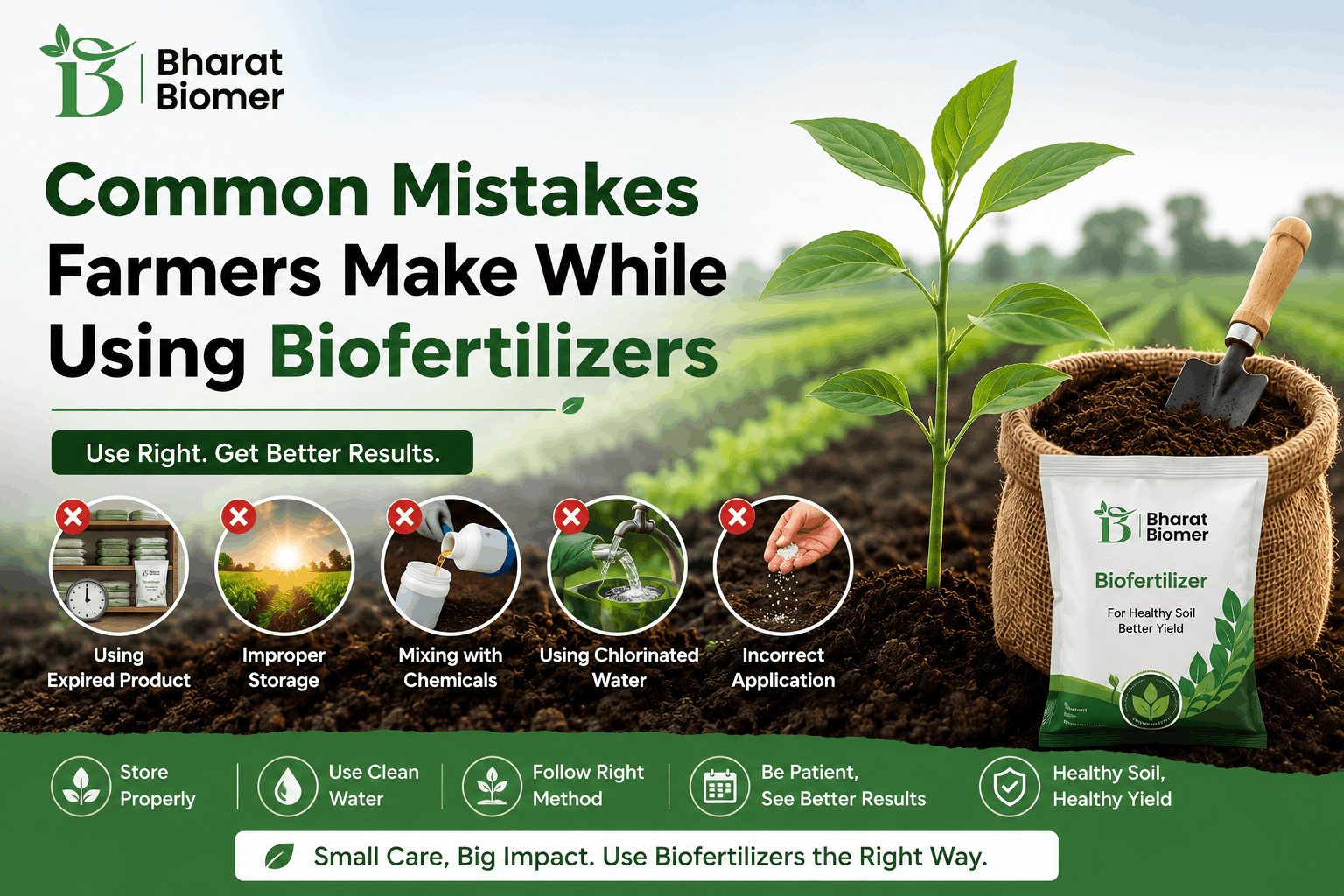
1. Using Expired Biofertilizers
One of the most common mistakes is using products after their expiry date. Since biofertilizers contain living microorganisms, their effectiveness decreases over time.
Before purchasing or applying any product, always check the manufacturing and expiry dates. Using fresh products ensures better microbial activity and improved results in the field.
2. Improper Storage
Many farmers store biofertilizers in direct sunlight or in areas with high temperatures. This can damage the beneficial microorganisms and reduce their effectiveness.
Biofertilizers should always be stored in a cool, dry place away from direct sunlight. Proper storage helps maintain the viability of the microorganisms until application.
3. Mixing with Chemical Fungicides
Some farmers mix biofertilizers directly with chemical fungicides or bactericides. This can kill the beneficial microorganisms present in the biofertilizer.
It is always recommended to follow the application guidelines provided by the manufacturer and avoid direct mixing with strong chemical products.
4. Using Chlorinated Water
Another common mistake is preparing biofertilizer solutions with chlorinated water. Chlorine can negatively affect the survival of beneficial microbes.
Whenever possible, use clean, non-chlorinated water for dilution and application. This helps maintain the effectiveness of the microbial culture.
5. Incorrect Application Method
Different biofertilizers require different application methods such as seed treatment, root dipping, soil application, or drip irrigation.
Applying a biofertilizer incorrectly can reduce its effectiveness. Farmers should always follow the recommended dosage and application method for their crop and farming conditions.
6. Expecting Immediate Results
Biofertilizers work differently from chemical fertilizers. They do not provide instant results because they need time to establish beneficial microbial activity in the soil.
Many farmers stop using biofertilizers too early because they expect quick results. Patience and consistent application are important for achieving long-term benefits.
7. Ignoring Soil Health
Biofertilizers perform best in healthy soil conditions. If the soil is severely degraded or lacks organic matter, the microorganisms may not perform efficiently.
Adding compost, farmyard manure, or organic matter along with biofertilizers can help create a better environment for microbial growth and activity.
8. Using the Wrong Product for the Crop
Not every biofertilizer is suitable for every crop. Different microbial cultures provide different benefits.
Farmers should choose products according to crop requirements, soil conditions, and nutrient deficiencies to achieve better results. Crop-specific recommendations often improve performance and nutrient efficiency.
Why Proper Use of Biofertilizers Matters
When used correctly, biofertilizers offer several advantages for farmers. They help improve soil health, enhance nutrient availability, support root development, and promote sustainable crop production. Research and field studies have shown that beneficial microorganisms play an important role in maintaining soil fertility and improving crop growth.
Many of these benefits align with the 10 benefits of organic farming, including improved soil health, reduced dependence on chemical fertilizers, better sustainability, and healthier crop production.
Biofertilizers and Organic Farming
Biofertilizers are an important part of many types of organic farming. Whether farmers choose integrated organic farming, crop rotation farming, or another type of organic farming, biofertilizers help support natural nutrient cycles and improve soil biological activity.
As awareness about sustainable agriculture grows, more farmers are adopting different organic farming types to maintain productivity while protecting natural resources. Biofertilizers continue to play a major role in this transition toward eco-friendly farming practices.
Role of Bharat Biomer in Sustainable Agriculture
Bharat Biomer Pvt. Ltd. is dedicated to helping farmers achieve better crop growth through innovative and sustainable agricultural solutions. The company offers high-quality biofertilizers, biopesticides, microbial solutions, and plant growth products designed to improve soil health, increase productivity, and support eco-friendly farming practices.
With a strong focus on research-driven biological solutions, Bharat Biomer helps farmers improve nutrient availability, strengthen root development, enhance soil microbial activity, and achieve better crop performance while maintaining long-term soil fertility.
Conclusion
Biofertilizers can deliver excellent results when used correctly, but simple mistakes can reduce their effectiveness. Proper storage, correct application methods, suitable product selection, and patience are essential for achieving the best outcomes.
As more farmers explore the types of organic farming, understanding the proper use of biofertilizers becomes increasingly important. Along with the 10 benefits of organic farming, biofertilizers help improve soil fertility, support healthy crop growth, and contribute to sustainable agriculture.
By avoiding these common mistakes and following recommended practices, farmers can make the most of biofertilizers and build a healthier, more productive farming system for the future.