

Agriculture today is moving towards sustainable and environmentally friendly farming practices. Farmers are looking for solutions that not only increase crop production but also improve soil fertility without causing long-term damage. One of the most effective solutions is biofertilizers.
Unlike chemical fertilizers that supply nutrients directly, biofertilizers contain beneficial microorganisms that naturally improve soil fertility and help plants absorb nutrients more efficiently. They promote healthier crops, stronger roots, and better yields while maintaining the natural balance of the soil.
At Bharat Biomer Pvt. Ltd., we believe that sustainable farming begins with healthy soil. Our scientifically developed biofertilizers are designed to support farmers by improving nutrient availability, enhancing plant growth, and increasing agricultural productivity through eco-friendly solutions.
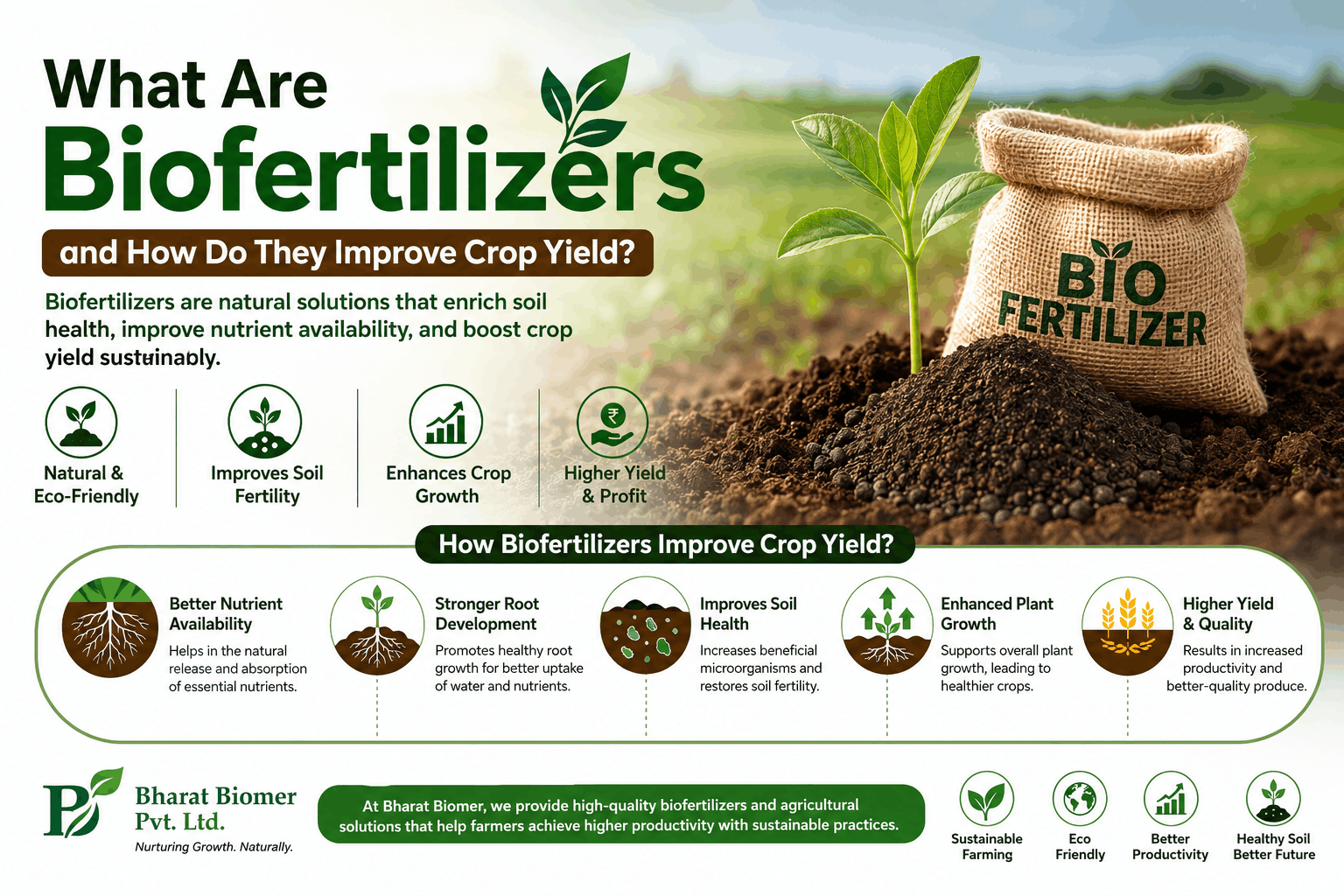
Biofertilizers are natural products containing beneficial microorganisms that improve soil fertility and help plants absorb essential nutrients more effectively. They enhance root development, promote healthier plant growth, improve crop yield, and reduce dependence on chemical fertilizers. By improving soil health naturally, biofertilizers support sustainable farming while protecting the environment for future generations.What Are Biofertilizers?
Biofertilizers are living microorganisms such as beneficial bacteria, fungi, and algae that naturally improve soil fertility. Once applied to seeds, roots, or soil, these microorganisms multiply and create a healthy environment around plant roots.
Instead of adding artificial nutrients, biofertilizers make nutrients already present in the soil more accessible to plants. They help fix atmospheric nitrogen, dissolve unavailable phosphorus, and improve the availability of important micronutrients.
Because they work with nature rather than against it, biofertilizers have become an important part of modern sustainable agriculture.
Some commonly used microorganisms include:
- Nitrogen-fixing bacteria
- Phosphate-solubilizing bacteria
- Potassium-mobilizing bacteria
- Mycorrhizal fungi
- Plant Growth Promoting Rhizobacteria (PGPR)
Each type performs a specific function that supports healthier crop development.
How Do Biofertilizers Work?
Biofertilizers improve crop growth by increasing the natural biological activity in the soil.
Here's how they work:
1. Nitrogen Fixation
Certain bacteria convert atmospheric nitrogen into forms that plants can easily absorb. This naturally supplies one of the most essential nutrients required for plant growth.
2. Phosphorus Solubilization
Although phosphorus exists in many soils, much of it remains unavailable to plants. Biofertilizers convert this locked phosphorus into plant-available forms, encouraging stronger root development.
3. Improved Root Growth
Beneficial microorganisms stimulate root development, allowing plants to absorb more water and nutrients from the soil.
4. Better Nutrient Uptake
Healthy microbial populations increase the availability of essential nutrients like potassium, zinc, and iron, resulting in stronger plant growth.
5. Enhanced Soil Microbiology
Biofertilizers encourage beneficial microbial activity that naturally improves soil structure, fertility, and long-term productivity.
Benefits of Biofertilizers
Using biofertilizers offers multiple benefits for farmers, crops, and the environment.
Improves Soil Health
Healthy soil contains millions of beneficial microorganisms. Biofertilizers restore this biological balance, improving soil fertility over time instead of degrading it.
Increases Crop Yield
Healthier roots and improved nutrient absorption lead to better plant growth, higher productivity, and improved crop quality.
Reduces Chemical Fertilizer Usage
Biofertilizers reduce the dependence on synthetic fertilizers by naturally supplying nutrients, helping farmers lower input costs over time.
Promotes Sustainable Farming
As natural products, biofertilizers leave no harmful chemical residues in the soil or water, making farming more environmentally friendly.
Improves Root Development
Stronger root systems allow crops to absorb nutrients more efficiently while improving drought tolerance.
Enhances Soil Fertility
Regular use increases microbial diversity, organic matter decomposition, and nutrient cycling, maintaining productive farmland for years.
Better Resistance to Stress
Healthy plants supported by beneficial microbes often perform better under drought, nutrient deficiency, and environmental stress.
Types of Biofertilizers
Different crops require different types of biofertilizers depending on their nutritional needs.
Nitrogen-Fixing Biofertilizers
These microorganisms convert atmospheric nitrogen into forms usable by plants.
Common examples include:
- Rhizobium
- Azotobacter
- Azospirillum
Ideal for:
- Pulses
- Cereals
- Oilseed crops
Phosphate Solubilizing Biofertilizers (PSB)
These microorganisms release phosphorus trapped in the soil, making it available for plant uptake.
Suitable for almost all agricultural crops.
Potassium Mobilizing Biofertilizers
These improve potassium availability, helping crops produce stronger stems and better-quality fruits.
Mycorrhizal Biofertilizers
These beneficial fungi increase the surface area of roots, significantly improving nutrient and water absorption.
Excellent for:
- Fruit crops
- Forestry plants
- Vegetables
Plant Growth Promoting Rhizobacteria (PGPR)
PGPR improve nutrient uptake while producing natural plant growth hormones that stimulate healthier development.
Biofertilizers vs Chemical Fertilizers
| Biofertilizers | Chemical Fertilizers |
|---|---|
| Natural microorganisms | Synthetic chemicals |
| Improve soil biology | May reduce soil fertility over time |
| Long-term soil health | Short-term nutrient supply |
| Environment friendly | Can pollute water and soil |
| Sustainable farming | Excessive use may damage ecosystems |
| Improve microbial diversity | Limited biological activity |
Rather than replacing nutrients artificially, biofertilizers improve the soil's natural ability to nourish crops.
Which Crops Benefit from Biofertilizers?
Biofertilizers are suitable for a wide variety of crops, including:
- Wheat
- Rice
- Maize
- Cotton
- Soybean
- Sugarcane
- Pulses
- Oilseeds
- Fruits
- Vegetables
- Horticultural crops
Farmers growing these crops often experience healthier plants, improved nutrient uptake, and higher productivity when biofertilizers are used correctly.Best Practices for Using Biofertilizers
To achieve the best results:
- Apply according to crop recommendations.
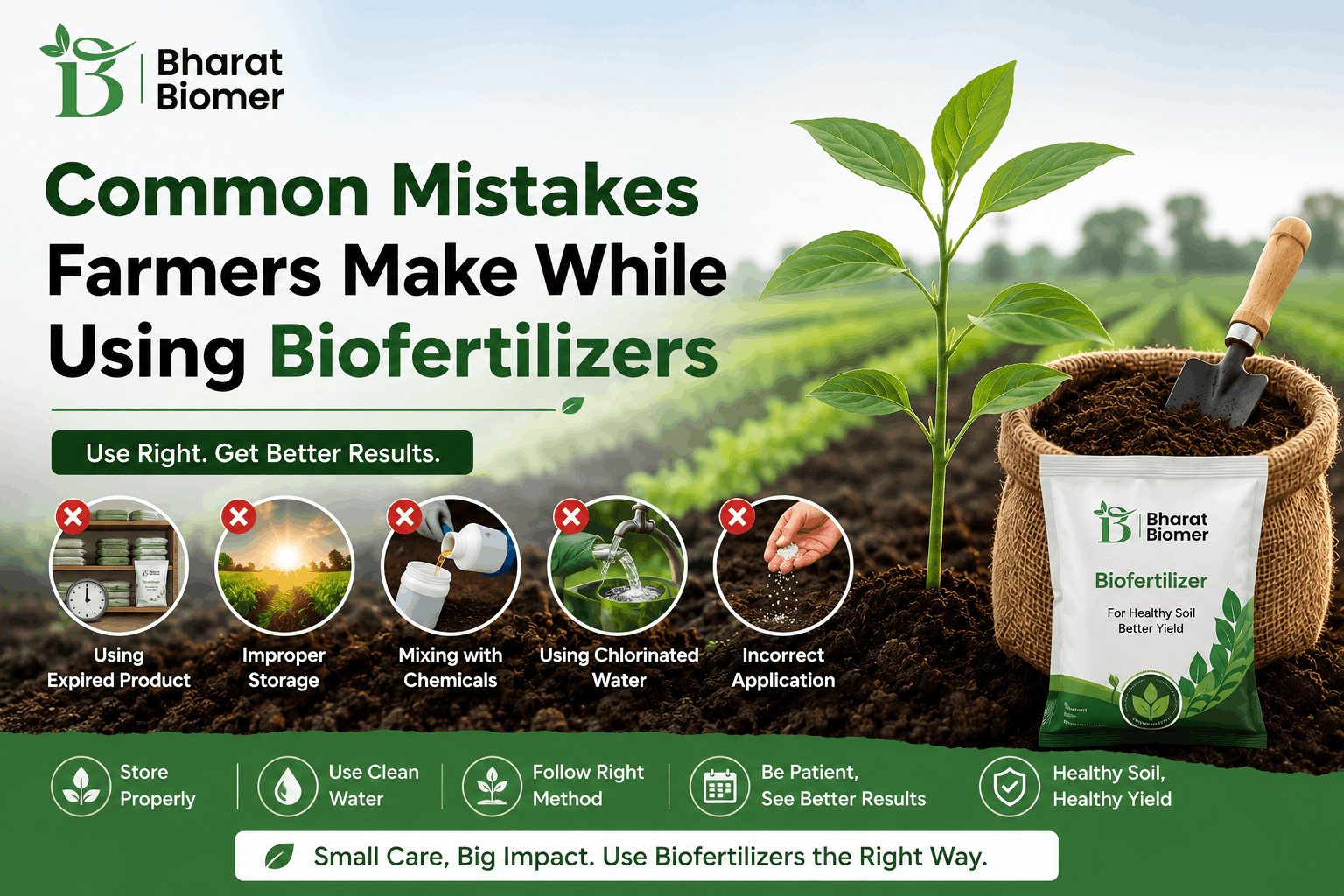
- Store products in a cool, dry place.
- Avoid direct sunlight during storage.
- Use before the expiry date.
- Combine with good soil management practices.
- Maintain proper irrigation after application.
- Follow recommended dosage for maximum effectiveness.
Proper application ensures beneficial microorganisms remain active and deliver the best results.
Why Choose Bharat Biomer?
Choosing the right agricultural partner is just as important as selecting the right product.
Bharat Biomer Pvt. Ltd. is committed to helping farmers improve productivity through innovative, sustainable, and science-backed agricultural solutions.
Our product portfolio includes:
- High-quality biofertilizers
- Biopesticides
- Plant growth promoters
- Sustainable crop nutrition solutions
Every product is developed with the goal of improving soil health, supporting stronger crops, and helping farmers achieve higher yields while reducing environmental impact.
By combining innovation with sustainable farming practices, Bharat Biomer continues to support modern agriculture across India.
Conclusion
Biofertilizers are transforming modern agriculture by improving soil fertility naturally, increasing nutrient availability, and supporting healthier crop growth. Unlike chemical fertilizers, they work with nature to build long-term soil productivity while reducing environmental impact.
Whether you are cultivating cereals, vegetables, fruits, or cash crops, incorporating high-quality biofertilizers into your farming practices can lead to healthier plants, improved yields, and more sustainable farming.
For farmers looking to increase productivity while protecting soil health, biofertilizers are a smart and future-ready solution.