

Biofertilizers vs Chemical Fertilizers is one of the most important discussions in modern agriculture. Farmers today are looking for solutions that not only improve crop yield but also protect soil health and reduce environmental impact. While Chemical Fertilizers have been widely used for decades to increase production, the growing demand for Sustainable Farming has encouraged farmers to explore bio-based alternatives. Understanding the difference between these two options helps farmers make informed decisions that support both productivity and long-term soil fertility.
When comparing Biofertilizers vs Chemical Fertilizers, the key difference lies in how they nourish plants. Biofertilizers contain beneficial microorganisms that naturally improve nutrient availability in the soil, whereas chemical fertilizers provide nutrients through synthetic compounds. Both have their place in agriculture, but their long-term effects on crops, soil, and the environment are significantly different.
At Bharat Biomer Pvt. Ltd., we believe that healthy soil is the foundation of healthy crops. Our range of high-quality biofertilizers, biopesticides, and plant growth products is developed to help farmers improve soil fertility, increase crop productivity, and adopt eco-friendly farming practices. By promoting sustainable agricultural solutions, Bharat Biomer supports farmers in achieving better yields while protecting natural resources for future generations.
What Are Biofertilizers?
Biofertilizers are natural products that contain living microorganisms such as bacteria, fungi, and algae. These beneficial microbes improve soil fertility by fixing atmospheric nitrogen, dissolving phosphorus, and increasing the availability of essential nutrients to plants. Instead of directly feeding the crop, biofertilizers enhance the natural biological processes within the soil.
Some common types of biofertilizers include:
- Nitrogen-fixing bacteria
- Phosphate-solubilizing bacteria
- Potassium-mobilizing bacteria
- Mycorrhizal fungi
- Zinc-solubilizing microorganisms
The growing popularity of Organic Farming has increased the demand for biofertilizers because they improve soil health naturally without leaving harmful residues.
What Are Chemical Fertilizers?
Chemical fertilizers are manufactured products that provide nutrients such as nitrogen (N), phosphorus (P), and potassium (K) directly to plants. These fertilizers are designed to produce rapid crop growth and immediate nutrient availability.
Common examples include:
- Urea
- DAP (Diammonium Phosphate)
- NPK fertilizers
- Potash
- Ammonium Sulphate
Although chemical fertilizers can increase production in the short term, excessive use may reduce soil microbial activity, increase soil acidity, and contribute to water pollution.
Biofertilizers vs Chemical Fertilizers: Key Differences
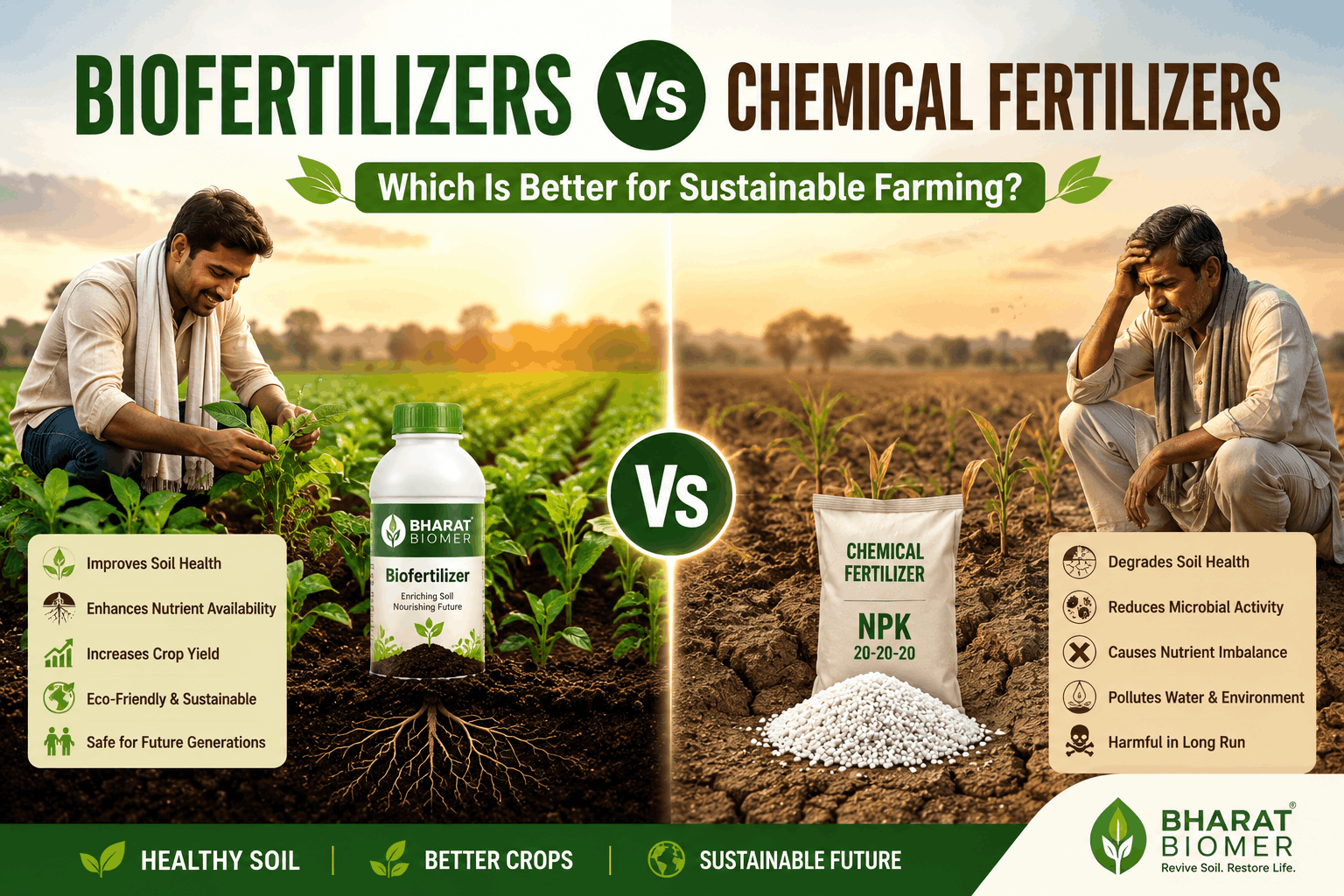
Understanding Biofertilizers vs Chemical Fertilizers becomes easier when their characteristics are compared side by side.
| Factor | Biofertilizers | Chemical Fertilizers |
|---|---|---|
| Source | Natural microorganisms | Synthetic chemicals |
| Soil Health | Improves soil fertility | May reduce soil quality over time |
| Environmental Impact | Eco-friendly | Can cause pollution if overused |
| Nutrient Release | Slow and natural | Fast and immediate |
| Cost Over Time | Economical | Higher recurring cost |
| Microbial Activity | Increases beneficial microbes | May reduce microbial diversity |
This comparison clearly shows why many farmers are gradually shifting toward bio-based agricultural inputs for long-term sustainability.
Why Biofertilizers Are Becoming the Preferred Choice
The discussion around Biofertilizers vs Chemical Fertilizers is increasingly focused on sustainability. Farmers are now considering not only crop yield but also soil quality, environmental protection, and input costs.
Some of the major Benefits of Biofertilizers include:
- Naturally improve soil fertility.
- Increase nutrient absorption by plant roots.
- Enhance beneficial microbial activity.
- Improve soil structure and water retention.
- Reduce dependency on synthetic fertilizers.
- Support eco-friendly agricultural practices.
- Help maintain long-term crop productivity.
Unlike synthetic fertilizers, biofertilizers continue working within the soil ecosystem, making them an excellent choice for farmers adopting Sustainable Farming practices.
Bharat Biomer Pvt. Ltd. focuses on developing advanced biofertilizer solutions that work in harmony with nature. By combining scientific innovation with agricultural expertise, the company helps farmers achieve healthier crops while preserving soil fertility for future generations.
Why the Biofertilizer vs Chemical Fertilizer Debate Matters Today
The debate surrounding Biofertilizer vs Chemical Fertilizer is no longer just about increasing production. It is about ensuring food security while protecting the environment. Modern agriculture faces several challenges, including declining soil fertility, climate change, water scarcity, and rising cultivation costs.
Choosing sustainable inputs plays a crucial role in addressing these issues. Biofertilizers help restore the natural balance of the soil by encouraging beneficial microorganisms that improve nutrient cycling. In contrast, excessive reliance on chemical fertilizers may provide quick results but can gradually reduce soil productivity if not managed responsibly.
As governments, agricultural experts, and farmers increasingly promote sustainable practices, integrating biofertilizers into farming systems is becoming an essential step toward resilient and environmentally responsible agriculture.
Biofertilizers vs Chemical Fertilizers is one of the most important discussions in modern agriculture. Farmers today are looking for solutions that not only improve crop yield but also protect soil health and reduce environmental impact. While Chemical Fertilizers have been widely used for decades to increase production, the growing demand for Sustainable Farming has encouraged farmers to explore bio-based alternatives. Understanding the difference between these two options helps farmers make informed decisions that support both productivity and long-term soil fertility.
When comparing Biofertilizers vs Chemical Fertilizers, the key difference lies in how they nourish plants. Biofertilizers contain beneficial microorganisms that naturally improve nutrient availability in the soil, whereas chemical fertilizers provide nutrients through synthetic compounds. Both have their place in agriculture, but their long-term effects on crops, soil, and the environment are significantly different.
Biofertilizers improve soil health by using beneficial microorganisms, while chemical fertilizers provide nutrients through synthetic compounds. For long-term soil fertility and sustainable farming, biofertilizers are generally the preferred solution, especially when integrated into a balanced nutrient management program.
Biofertilizers vs Chemical Fertilizers: Environmental Impact and Long-Term Sustainability
One of the biggest differences in Biofertilizers vs Chemical Fertilizers is their impact on the environment. Modern agriculture must balance high crop productivity with the responsibility of protecting natural resources. While chemical fertilizers have helped increase food production worldwide, their excessive and continuous use has raised concerns about soil degradation, water pollution, and greenhouse gas emissions.
Biofertilizers are natural products containing beneficial microorganisms that improve soil fertility and nutrient availability. Chemical fertilizers are synthetic nutrient sources that deliver nutrients quickly but may reduce soil health over time if overused. For sustainable farming, biofertilizers help maintain soil productivity while reducing environmental impact.
Biofertilizers offer a more sustainable approach by working with nature instead of against it. They introduce beneficial microorganisms into the soil, improving nutrient cycling and promoting healthier root development. These microorganisms naturally fix nitrogen, solubilize phosphorus, and make essential nutrients more accessible to plants. As a result, farmers can reduce their dependence on synthetic fertilizers while maintaining productive and healthy crops.
In contrast, excessive application of chemical fertilizers can lead to nutrient runoff into rivers and lakes, causing water pollution and disrupting aquatic ecosystems. Long-term overuse may also reduce soil biodiversity, making the land less fertile over time. For farmers focused on Sustainable Farming, integrating biofertilizers into nutrient management programs can help preserve soil health for future generations.
Cost Comparison: Which Option Offers Better Value?
When comparing Biofertilizers vs Chemical Fertilizers, many farmers initially focus on the purchase price. Chemical fertilizers often provide immediate results, but they usually require repeated applications throughout the growing season. Rising fertilizer prices can significantly increase production costs year after year.
Biofertilizers, on the other hand, work by improving the natural fertility of the soil. Although their effects may not always be as immediate as synthetic fertilizers, they contribute to long-term improvements in soil quality, reducing the need for excessive chemical inputs over time.
Long-Term Economic Benefits of Biofertilizers
- Lower dependence on synthetic fertilizers
- Improved soil fertility for future cropping seasons
- Better nutrient-use efficiency
- Enhanced root development
- Reduced environmental remediation costs
- Increased sustainability and farm profitability
Rather than viewing biofertilizers as a replacement for all fertilizers, many agricultural experts recommend integrating them into an Integrated Nutrient Management (INM) strategy for balanced crop nutrition and improved economic returns.
Which Fertilizer Is Better for Different Farming Systems?
The answer to the Biofertilizer vs Chemical Fertilizer debate depends on farming objectives, soil conditions, and crop requirements.
Biofertilizers are ideal for:
- Organic farming systems
- Sustainable farming practices
- Soil restoration programs
- Horticulture
- Fruit orchards
- Vegetable cultivation
- Pulse and oilseed crops
- Long-term soil improvement
Chemical Fertilizers may be useful for:
- Correcting severe nutrient deficiencies
- Providing immediate nutrient availability
- High-intensity farming under proper nutrient management
- Supporting crops during critical growth stages
The most successful farming systems often combine scientific soil testing with balanced nutrient management rather than relying exclusively on one solution.
Why Farmers Are Choosing Bharat Biomer Pvt. Ltd.
As agriculture continues to evolve, farmers need reliable partners who understand both productivity and sustainability. Bharat Biomer Pvt. Ltd. is committed to developing innovative agricultural solutions that improve crop performance while protecting soil health.
The company's portfolio includes high-quality biofertilizers, biopesticides, and plant growth products developed to support eco-friendly farming practices. By focusing on quality, research, and farmer education, Bharat Biomer helps growers adopt practices that enhance soil fertility, improve nutrient availability, and contribute to long-term agricultural sustainability.
Whether the goal is healthier crops, better soil structure, or reduced dependence on excessive chemical inputs, Bharat Biomer provides solutions designed to support modern farming challenges responsibly.
Conclusion
The comparison of Biofertilizers vs Chemical Fertilizers is not about choosing one solution for every situation—it is about selecting the right approach for sustainable agricultural success. Chemical fertilizers remain useful for addressing immediate nutrient requirements, but excessive dependence on them can negatively affect soil health and the environment.
Biofertilizers offer a natural and environmentally friendly alternative by enhancing beneficial microbial activity, improving nutrient availability, and supporting long-term soil fertility. As awareness of Sustainable Farming and Organic Farming continues to grow, biofertilizers are becoming an essential component of modern agriculture.
For farmers seeking reliable, science-backed biological solutions, Bharat Biomer Pvt. Ltd. provides products that promote healthier soils, stronger crops, and environmentally responsible farming. By adopting balanced nutrient management and integrating biofertilizers into cultivation practices, farmers can improve productivity today while preserving agricultural resources for future generations.
At Bharat Biomer Pvt. Ltd., we believe that healthy soil is the foundation of healthy crops. Our range of high-quality biofertilizers, biopesticides, and plant growth products is developed to help farmers improve soil fertility, increase crop productivity, and adopt eco-friendly farming practices. By promoting sustainable agricultural solutions, Bharat Biomer supports farmers in achieving better yields while protecting natural resources for future generations.