

Can Biofertilizers Replace Chemical Fertilizers? A Complete Guide to Sustainable Farming
Agriculture is undergoing a remarkable transformation as farmers across the globe seek sustainable ways to increase productivity while protecting the environment. One of the biggest questions being asked today is: Can Biofertilizers Replace Chemical Fertilizers?
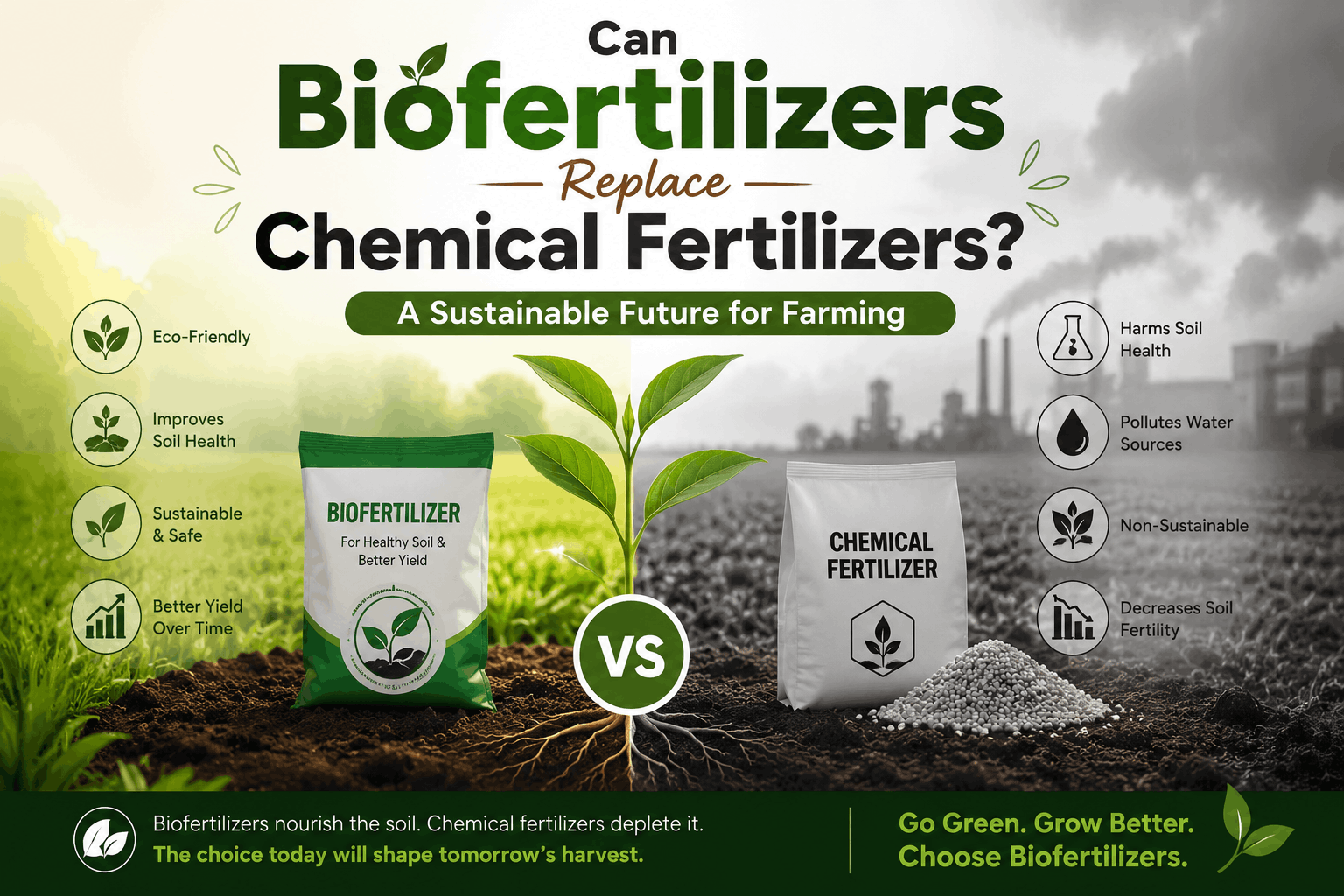
For decades, chemical fertilizers have played a major role in increasing agricultural production. However, excessive dependence on synthetic fertilizers has resulted in declining soil fertility, groundwater contamination, nutrient imbalance, and reduced microbial activity in the soil.
This is where biofertilizers are becoming an increasingly popular solution. These naturally occurring microorganisms improve soil fertility, enhance nutrient availability, and promote healthy plant growth without causing environmental damage.
Companies like Bharat Biomer Pvt. Ltd. are leading this agricultural revolution by providing innovative biofertilizers, biopesticides, and plant growth-promoting solutions that help farmers achieve higher yields while maintaining long-term soil health.
In this comprehensive guide, we'll explore whether biofertilizers can truly replace chemical fertilizers, their advantages, limitations, future potential, and why sustainable agriculture is becoming the future of farming.
What Are Biofertilizers?
Biofertilizers are living microorganisms that naturally enhance plant nutrition by increasing nutrient availability in the soil.
Unlike chemical fertilizers that directly supply nutrients, biofertilizers work with nature by improving biological processes in the soil.
Common microorganisms include:
- Rhizobium
- Azotobacter
- Azospirillum
- Phosphate Solubilizing Bacteria (PSB)
- Potash Mobilizing Bacteria (KMB)
- Mycorrhiza
- Zinc Solubilizing Bacteria
These beneficial microbes colonize plant roots and make nutrients more available for crop uptake.
What Are Chemical Fertilizers?
Chemical fertilizers are industrially manufactured nutrient formulations containing Nitrogen (N), Phosphorus (P), and Potassium (K).
Popular examples include:
- Urea
- DAP
- NPK
- MOP
- SSP
They provide nutrients immediately but excessive use often leads to:
- Soil degradation
- Reduced organic matter
- Water pollution
- Nutrient leaching
- Loss of beneficial microorganisms
- Increased farming costs
Can Biofertilizers Replace Chemical Fertilizers?
The answer is Yes but not always completely.
Biofertilizers have enormous potential to replace a significant portion of chemical fertilizers, especially when combined with good agricultural practices.
Complete replacement depends upon:
- Soil fertility
- Crop type
- Climate
- Irrigation availability
- Existing nutrient levels
- Farm management practices
Most agricultural experts recommend reducing chemical fertilizer use gradually while increasing biofertilizer applications.
This balanced approach ensures:
- Better nutrient availability
- Healthy soil
- Improved crop quality
- Reduced cultivation cost
- Sustainable farming
Why Excessive Chemical Fertilizer Use Is a Concern
Continuous use of synthetic fertilizers causes several long-term problems.
Soil Becomes Less Fertile
Beneficial microorganisms decline over time.
Soil Structure Weakens
Organic carbon decreases, making soil compact.
Water Pollution
Nitrates seep into groundwater.
Higher Farming Costs
Farmers often need increasing fertilizer doses every year.
Lower Nutritional Value
Excess nitrogen can affect crop quality.
How Biofertilizers Improve Soil Health
Healthy soil is full of microorganisms.
Biofertilizers help by:
- Fixing atmospheric nitrogen
- Solubilizing phosphorus
- Mobilizing potassium
- Producing plant growth hormones
- Increasing root development
- Improving microbial diversity
- Enhancing nutrient cycling
As soil biology improves, crops become healthier and more resilient.
Major Benefits of Biofertilizers
1. Improves Soil Fertility
Biofertilizers increase natural nutrient availability without harming the environment.
2. Reduces Chemical Dependency
Farmers can significantly lower synthetic fertilizer usage.
3. Better Root Development
Healthy roots absorb more nutrients and water.
4. Higher Crop Yield
Balanced nutrition leads to improved productivity.
5. Better Soil Microbiology
Beneficial bacteria multiply naturally.
6. Cost Effective
Long-term fertilizer expenses decrease.
7. Environment Friendly
No toxic residues.
Lower greenhouse gas emissions.
Improved biodiversity.
8. Enhances Crop Quality
Many farmers observe:
- Better grain quality
- Improved fruit size
- Higher nutritional value
- Longer shelf life
Limitations of Biofertilizers
Despite numerous advantages, biofertilizers also have some limitations.
Slower Results
Microorganisms require time to establish.
Environmental Conditions
Performance depends on:
- Moisture
- Temperature
- Soil pH
Storage Requirements
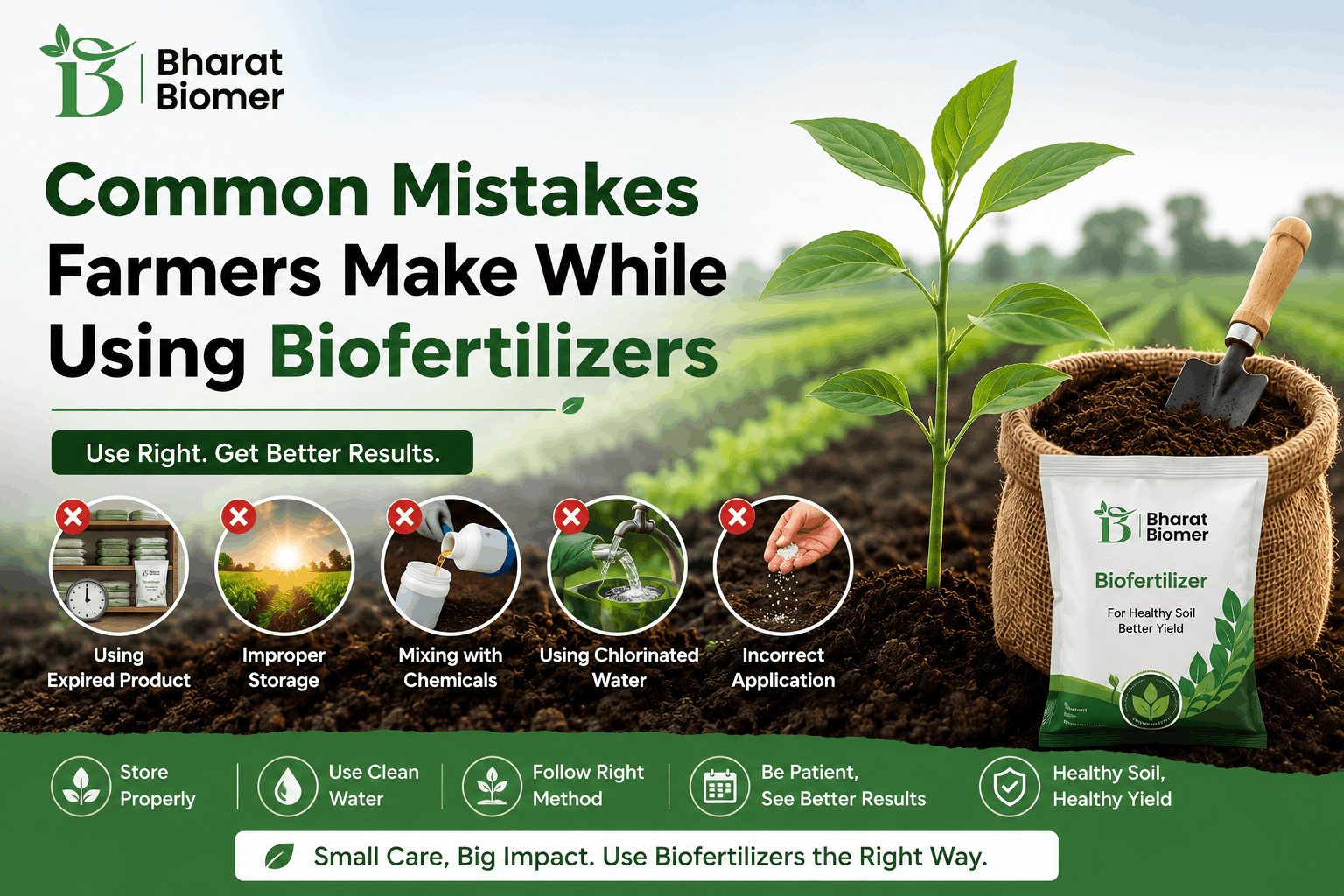
Living microorganisms need proper storage.
Farmer Awareness
Proper application methods are essential.
These challenges can be minimized through quality products and proper agricultural guidance.
Integrated Nutrient Management: The Best Approach
Instead of completely eliminating chemical fertilizers overnight, experts recommend Integrated Nutrient Management (INM).
INM combines:
- Biofertilizers
- Organic manure
- Compost
- Crop residues
- Limited chemical fertilizers
Benefits include:
- Balanced nutrition
- Higher yield
- Healthy soil
- Better profitability
- Long-term sustainability
Why Farmers Are Choosing Biofertilizers
Modern agriculture is shifting toward sustainability because farmers are experiencing:
- Reduced input costs
- Better soil health
- Government support
- Improved export opportunities
- Higher consumer demand for residue-free food
Bharat Biomer Pvt. Ltd.: Driving Sustainable Agriculture
Bharat Biomer Pvt. Ltd. is committed to transforming Indian agriculture through innovative biological solutions that promote sustainable farming and long-term soil health.
The company's portfolio includes:
- Premium Biofertilizers
- Advanced Biopesticides
- Plant Growth Promoters
- Soil Health Solutions
- Sustainable Crop Nutrition Products
By focusing on research, quality, and farmer-centric innovation, Bharat Biomer helps growers improve productivity while reducing dependence on excessive chemical inputs.
Key strengths include:
- High-quality formulations
- Scientific product development
- Sustainable agricultural practices
- Eco-friendly crop solutions
- Enhanced soil microbial activity
- Improved nutrient efficiency
Farmers adopting Bharat Biomer's solutions can build healthier soils, support stronger crop growth, and contribute to environmentally responsible agriculture. For more information about their products and sustainable farming solutions, visit https://www.bharatbiomer.com/.
The Future of Biofertilizers
The future of agriculture is increasingly centered on biological solutions.
Emerging technologies include:
- Nano biofertilizers
- Precision agriculture
- AI-based nutrient management
- Smart microbial formulations
- Customized biofertilizer blends
- Climate-resilient agriculture
As global demand for sustainable farming rises, biofertilizers are expected to play a much larger role in crop nutrition.
How Farmers Can Transition Successfully
To adopt biofertilizers effectively:
- Test your soil before application.
- Select crop-specific biofertilizers.
- Use certified, high-quality products.
- Follow recommended application methods.
- Reduce chemical fertilizers gradually.
- Monitor crop performance regularly.
- Combine with organic matter for the best results.
Conclusion
So, can biofertilizers replace chemical fertilizers? The evidence suggests that biofertilizers have the potential to replace a substantial portion of chemical fertilizers, especially when integrated with sound nutrient management practices. While a complete transition may not be practical for every farming system immediately, adopting biofertilizers can significantly improve soil health, reduce environmental impact, and lower production costs over time.
As agriculture moves toward sustainability, biological inputs will become increasingly important. Organizations like Bharat Biomer Pvt. Ltd. are helping lead this transition by providing innovative, science-backed solutions that empower farmers to produce healthier crops while preserving the environment for future generations.
For growers seeking long-term productivity and resilient farming systems, investing in high-quality biofertilizers is not just an environmentally responsible choice it is a strategic decision for the future of agriculture.