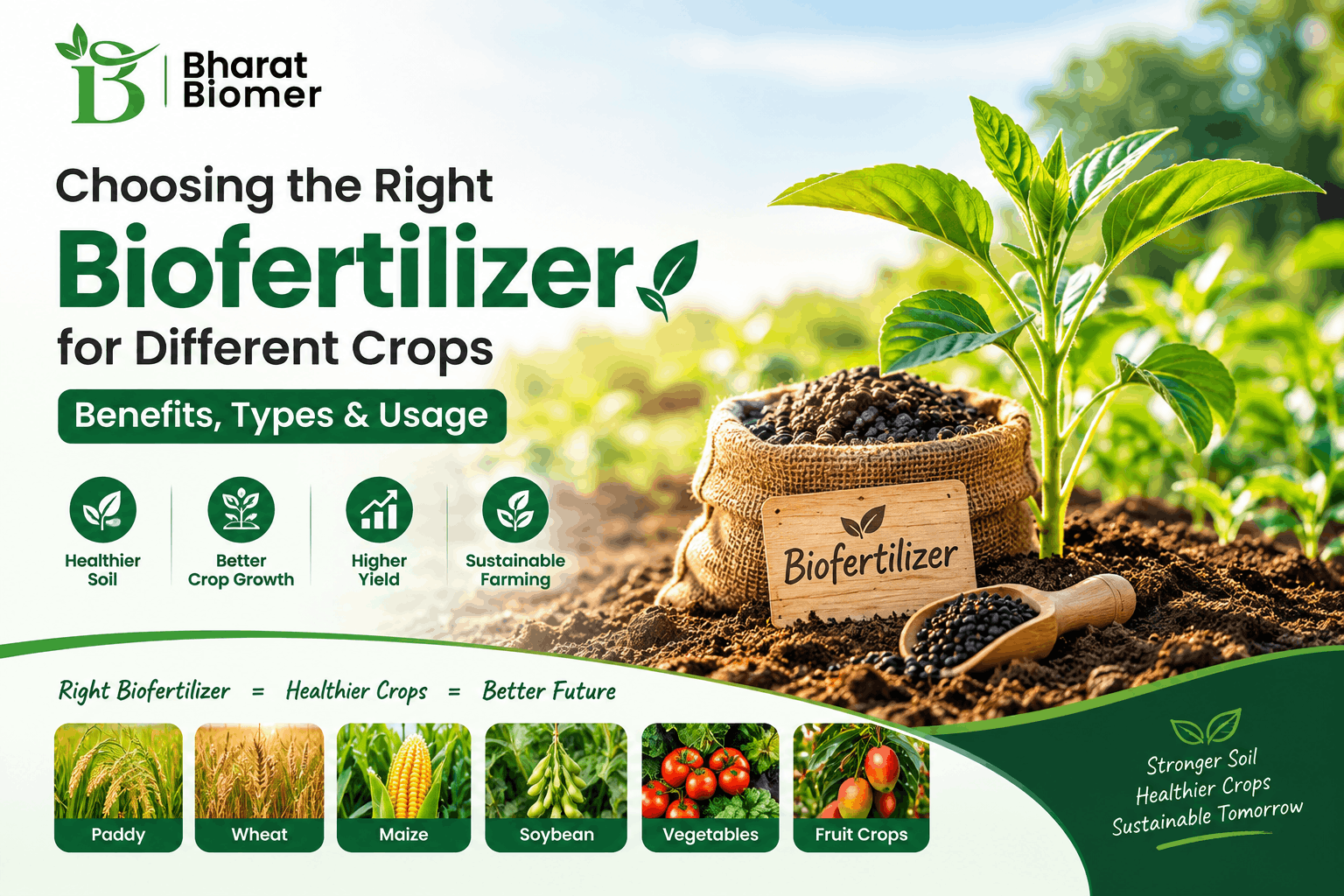


Farmers today are looking for practical ways to improve crop productivity without putting additional pressure on soil health. This shift toward sustainable agriculture has increased interest in biofertilizers products that use beneficial microorganisms to support nutrient availability and healthier plant growth.
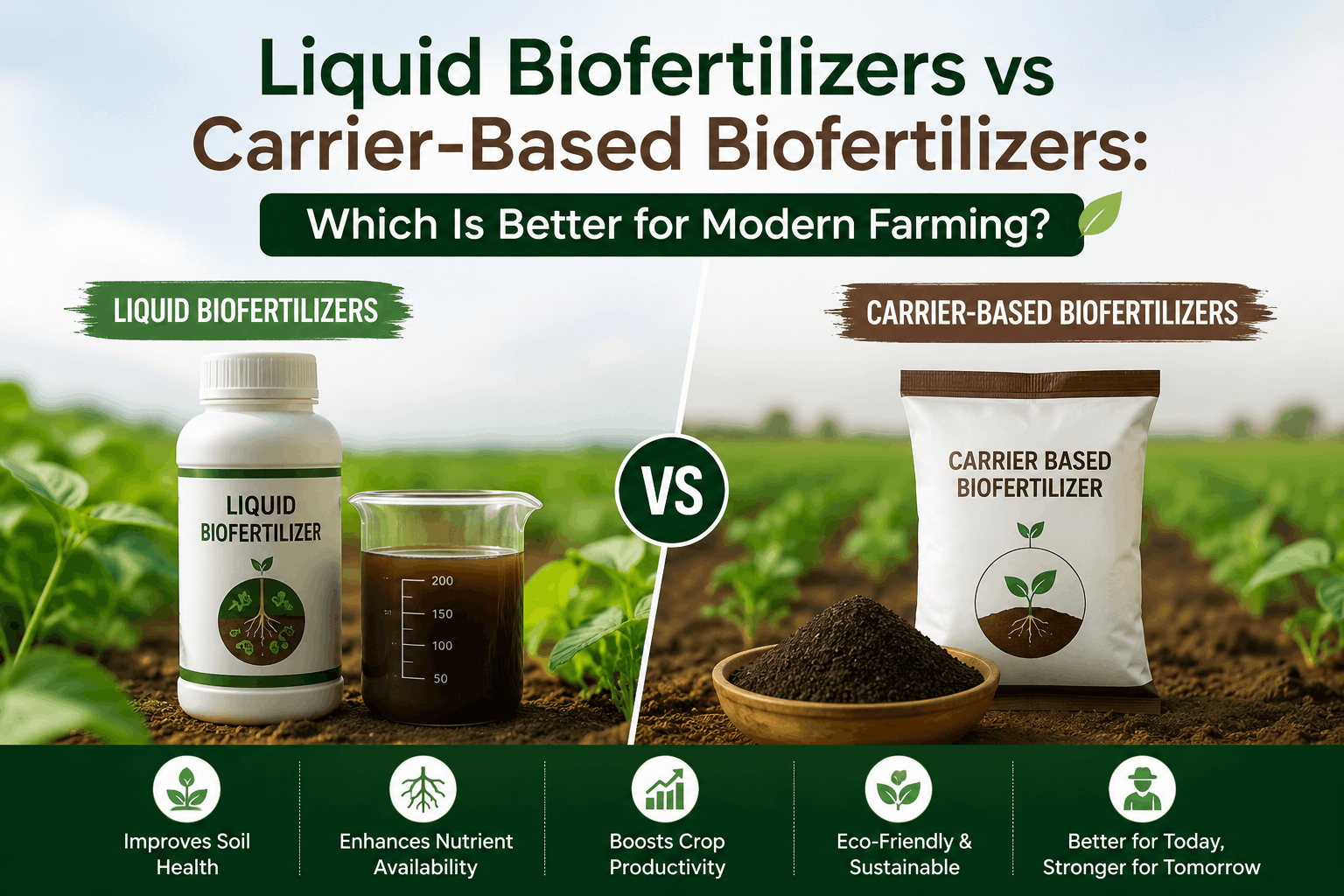
However, biofertilizers are available in different formulations, and choosing the right one can sometimes be confusing. One of the most common comparisons is liquid biofertilizers vs carrier-based biofertilizers.
Both formulations are designed to deliver beneficial microorganisms to the soil or plant system, but they differ in formulation, storage, shelf life, handling, and field application.
Understanding these differences can help farmers choose a biofertilizer that better suits their crops, farming practices, and field conditions.
What Is a Liquid Biofertilizer?
A liquid biofertilizer is a formulation in which beneficial microorganisms are maintained in a liquid medium designed to support their viability during storage and application.
Depending on the formulation, these microorganisms can support important agricultural processes such as nitrogen fixation, phosphorus solubilization, potassium mobilization, and improved nutrient availability.
One of the major reasons liquid biofertilizers have gained attention in modern agriculture is their convenience. They can be easier to measure and apply through recommended agricultural practices and can offer good microbial stability when manufactured and stored correctly.
The liquid medium also helps maintain conditions suitable for microbial survival, making these formulations a practical option for farmers looking for efficient biological inputs.
What Is a Carrier-Based Biofertilizer?
A carrier based biofertilizer contains beneficial microorganisms mixed with a solid carrier material. Materials such as peat, lignite, charcoal, or other suitable organic substances may be used as carriers depending on the formulation.
The carrier provides a medium through which microorganisms can be stored, transported, and introduced into the agricultural environment.
Carrier-based formulations have been used in agriculture for many years and can provide effective results when the product is of good quality and is stored and applied according to recommendations.
However, the quality of the carrier material, moisture conditions, storage environment, and microbial population can influence product performance.
Liquid Biofertilizers vs Carrier-Based Biofertilizers: Key Differences
When comparing liquid biofertilizers vs carrier-based biofertilizers, it is important to look beyond their physical form. Their practical differences can influence storage, transportation, application, and microbial viability.
Factor-wise comparison between liquid biofertilizers and carrier-based biofertilizers can be understood more clearly in descriptive form rather than a table.
In terms of form, liquid biofertilizers come as a fluid formulation, whereas carrier-based biofertilizers are prepared using a solid carrier material that holds the microorganisms.
When it comes to the microbial medium, liquid biofertilizers maintain beneficial microbes in a liquid environment designed to support their survival, while carrier-based products rely on a solid organic or mineral carrier to support microbial life.
Regarding shelf stability, liquid formulations are often developed to maintain microbial viability for a longer and more consistent period under recommended storage conditions. Carrier-based biofertilizers, on the other hand, can be more sensitive to environmental factors such as temperature and moisture during storage.
For application, liquid biofertilizers are generally easier to apply in measured quantities and can be used as per specific agricultural recommendations. Carrier-based biofertilizers may require additional handling such as mixing or preparation before use, depending on the product type.
In terms of contamination risk, liquid formulations when produced under controlled conditions can have a lower risk of contamination. Carrier-based biofertilizers depend heavily on the quality of the carrier material and manufacturing process, which can influence their purity and effectiveness.
Looking at storage requirements, liquid biofertilizers are usually more convenient when stored according to label instructions. Carrier-based products require more careful management of moisture levels and temperature to maintain microbial viability.
For handling, liquid biofertilizers are easier to measure, mix, and transport in controlled quantities. Carrier-based formulations can be bulkier and may require more effort in handling depending on packaging and formulation.
Finally, in terms of field use, liquid biofertilizers are suitable for a variety of recommended application methods depending on the crop and product guidelines. Carrier-based biofertilizers are commonly used for seed treatment and soil application, where solid carriers can effectively deliver microbes into the soil environment.
The exact performance of either formulation ultimately depends on microbial strain quality, formulation technology, storage, crop requirements, soil conditions, and correct application.
Advantages of Liquid Biofertilizers
A major advantage of a liquid biofertilizer is formulation stability. A properly developed liquid formulation can help maintain viable microbial populations during its recommended shelf life.
Liquid formulations are also convenient to handle. Farmers can measure the required quantity according to product instructions and apply it using the recommended method.
Another benefit is flexibility. Depending on the specific product, crop, and label instructions, liquid microbial inputs may be suitable for seed treatment, root treatment, soil application, or other recommended agricultural applications.
For large farms where operational convenience matters, this ease of handling can make liquid formulations particularly useful.
Benefits of Carrier-Based Biofertilizers
Carrier-based biofertilizers continue to have an important place in biological farming.
Their biggest advantage is familiarity. Farmers have used solid microbial formulations for decades, and they can be effective when produced with a suitable carrier and maintained under appropriate conditions.
A quality carrier based biofertilizer can introduce beneficial microorganisms into the crop environment and support nutrient cycling and soil microbial activity.
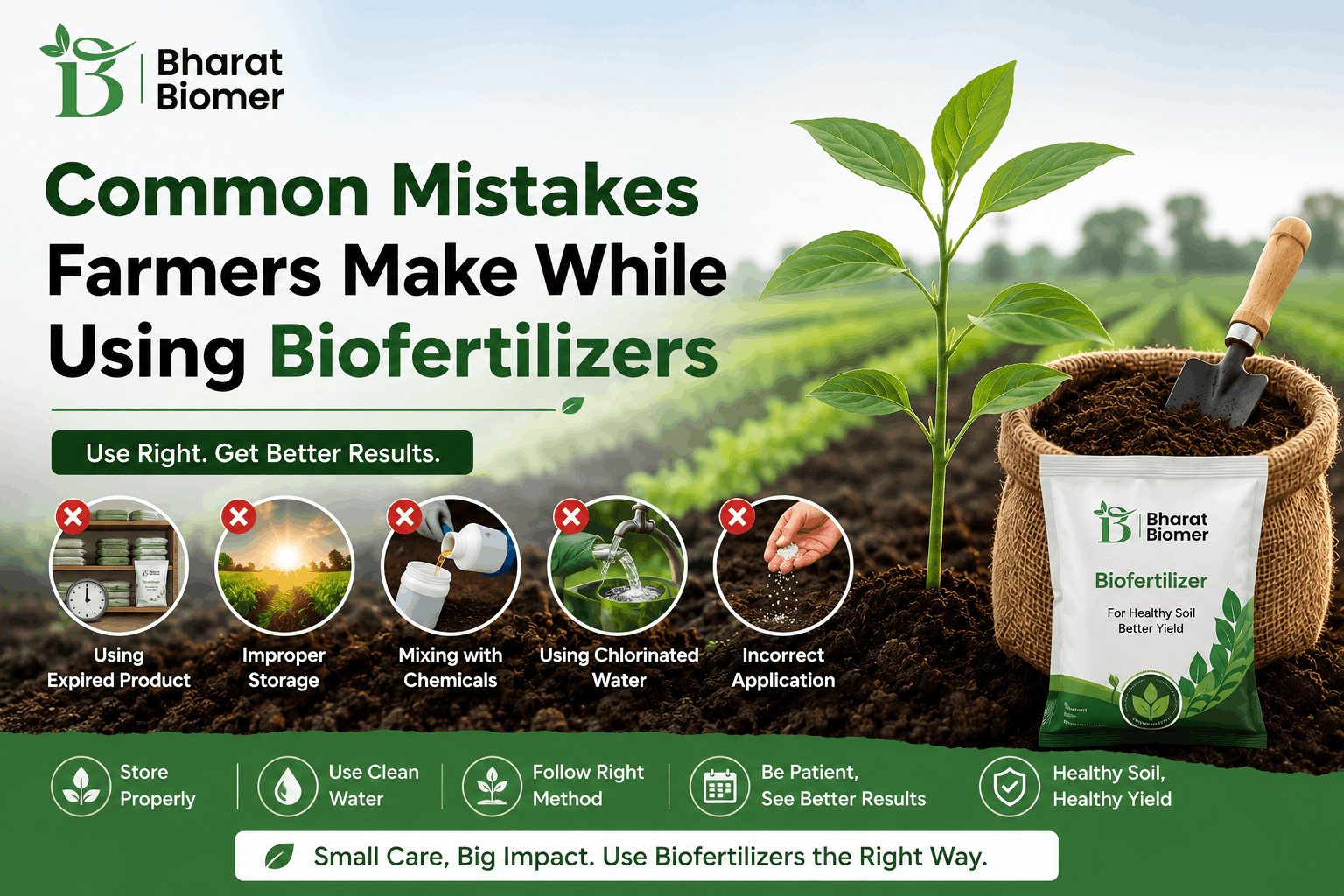
However, farmers need to pay close attention to storage instructions, expiry dates, product quality, and application recommendations. Poor storage or inappropriate environmental conditions can affect microbial viability and ultimately reduce field performance.
Liquid vs Carrier-Based Biofertilizer: Which One Should Farmers Choose?
There is no single formulation that is automatically best for every crop or farming situation.
When evaluating liquid vs carrier based biofertilizer, farmers should consider the crop being grown, soil conditions, application method, storage facilities, microbial strain, product quality, and manufacturer recommendations.
Liquid formulations may be preferred where farmers need convenient handling, formulation stability, and flexible application. Carrier-based products can also be effective where appropriate storage and application practices are available.
Most importantly, farmers should avoid choosing a biofertilizer only on the basis of whether it is liquid or solid.
The quality and suitability of the microorganisms matter just as much as the formulation itself.
Why Microbial Quality Matters More Than Formulation Alone
A biofertilizer works because of the beneficial microorganisms it contains. Therefore, selecting the right microbial strain and maintaining its viability are essential for achieving consistent agricultural results.
Beneficial microbes can help improve nutrient availability, support soil biological activity, and contribute to stronger crop development. But their effectiveness depends on several factors, including soil conditions, crop type, climate, application timing, and formulation quality.
This is why farmers should choose science-backed biological inputs rather than focusing only on packaging or price.
Supporting Sustainable Agriculture with Bharat Biomer
At Bharat Biomer Pvt. Ltd., the focus is on developing biological agricultural solutions that support crop performance while protecting long-term soil health.
The company works with beneficial microbes and biotechnology-driven agricultural solutions designed for Indian farming conditions. Its approach combines research-driven formulation development, field validation, and farmer-focused product design to address practical crop and soil challenges.
By supporting microbial activity, nutrient availability, soil vitality, and crop performance, Bharat Biomer aims to help farmers move toward more productive and environmentally responsible agriculture.
Conclusion
The debate around liquid biofertilizers vs carrier-based biofertilizers is not simply about choosing liquid over solid. Both formulations can play a useful role in agriculture when they contain suitable microorganisms and are manufactured, stored, and applied correctly.
A liquid biofertilizer may offer advantages in terms of handling, formulation stability, and application convenience, while a carrier-based biofertilizer remains a familiar and practical option for many farming systems.
For farmers, the better choice is ultimately the formulation that provides reliable microbial quality, suits the crop and soil conditions, and can be applied correctly in the field.
As agriculture moves toward more sustainable practices, choosing high-quality biological inputs can help farmers support healthier soils, efficient nutrient use, and productive crops for the long term.