
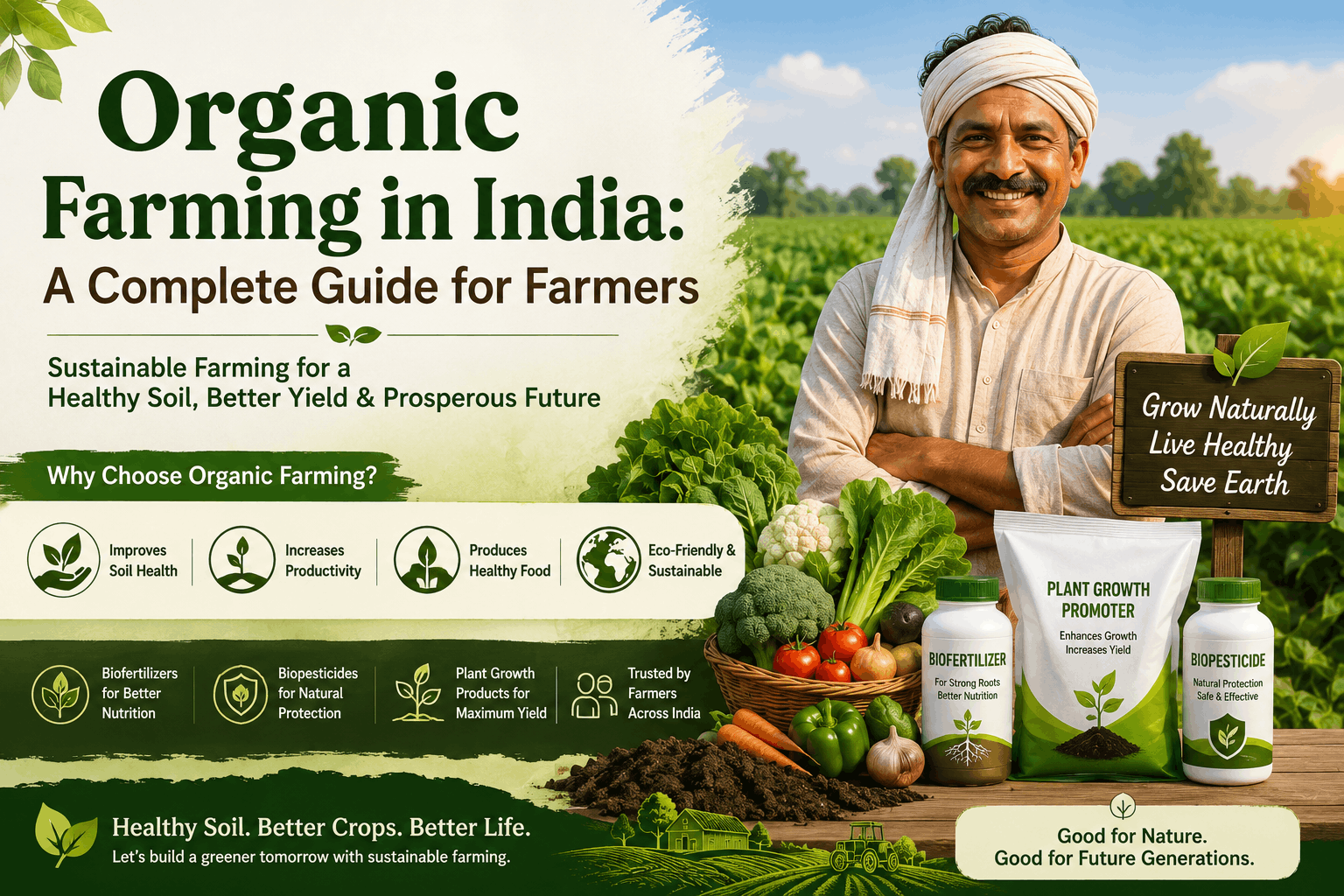
Organic farming in India is no longer just an alternative farming method it is becoming the future of sustainable agriculture. With increasing concerns about soil degradation, rising input costs, and chemical residues in food, more farmers are shifting towards organic farming to improve soil fertility, produce healthier crops, and secure better market prices.
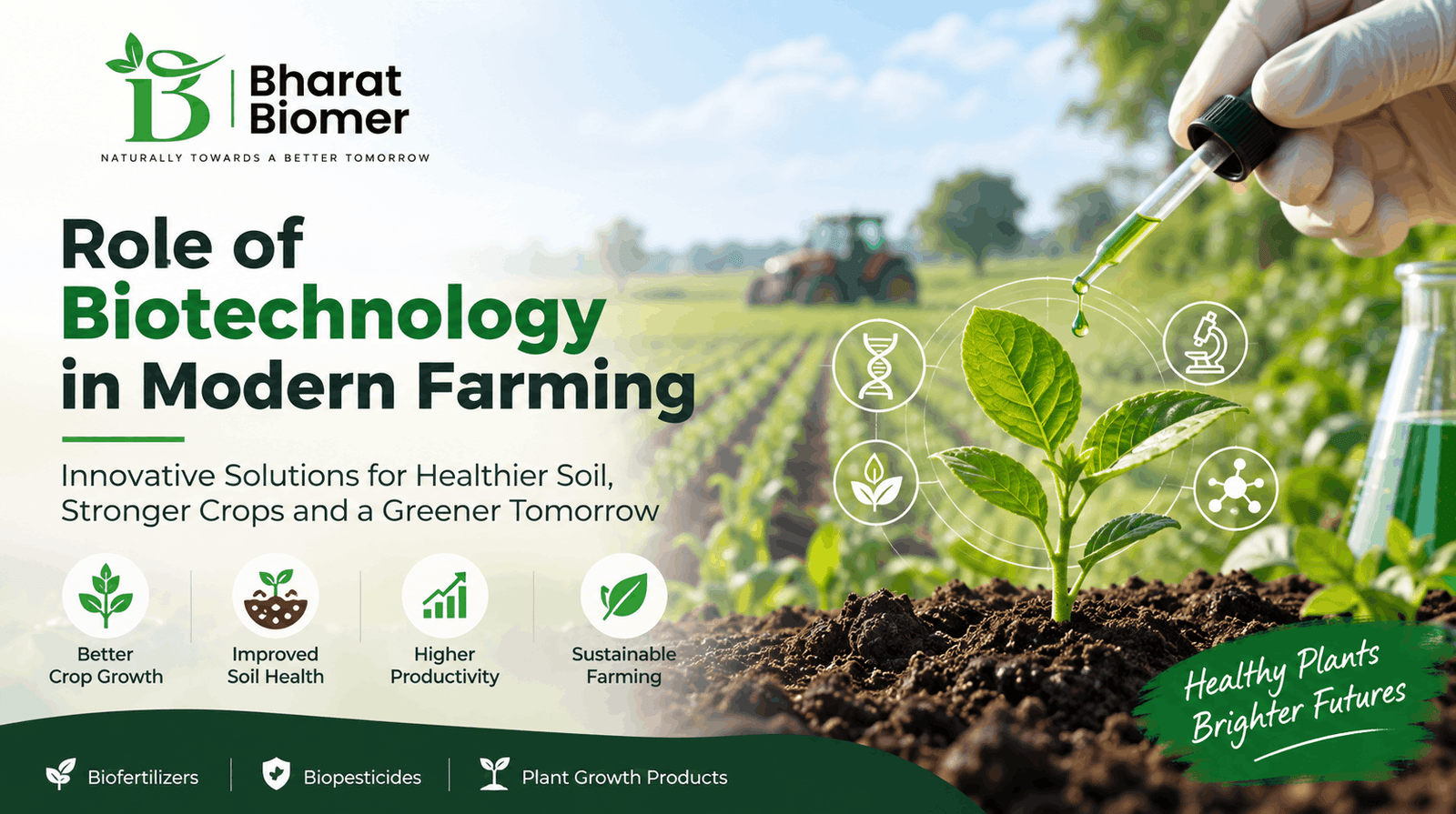
India has always had a strong agricultural heritage based on natural farming practices. Today, modern organic farming combines those traditional methods with scientific innovations such as biofertilizers, biopesticides, and sustainable crop management techniques to help farmers achieve higher productivity without harming the environment.
Whether you are a beginner or an experienced farmer, this guide will help you understand everything about organic farming in India.
What is Organic Farming?
Organic farming is an agricultural system that grows crops without using synthetic fertilizers, pesticides, herbicides, or genetically modified organisms (GMOs).
Instead, it focuses on natural methods that improve soil fertility and maintain ecological balance. Farmers use:
- Biofertilizers
- Organic manure
- Compost
- Vermicompost
- Green manure
- Crop rotation
- Biological pest control
The main objective is to produce healthy food while protecting soil, water, biodiversity, and human health.
History of Organic Farming in India
Organic farming has deep roots in Indian agriculture. For centuries, Indian farmers relied on cow dung, compost, crop residues, and natural farming techniques before chemical fertilizers became popular during the Green Revolution.
Although chemical farming helped increase food production, excessive use of synthetic inputs gradually affected soil fertility and groundwater quality.
In recent years, awareness about sustainable agriculture has encouraged farmers to return to eco-friendly farming methods. Government support, growing consumer demand, and increasing exports have made organic farming one of the fastest-growing agricultural sectors in India.
Why Organic Farming is Growing in India
Several factors are driving the rapid growth of organic farming across the country.
- Increasing demand for chemical-free food
- Better export opportunities
- Government subsidies and certification support
- Rising awareness about environmental protection
- Declining soil fertility due to excessive chemical usage
- Better long-term profitability
- Growing popularity of biofertilizers and biopesticides
Consumers today are willing to pay premium prices for organic produce, making it an attractive option for farmers.
Benefits of Organic Farming
Organic farming offers long-term advantages for both farmers and consumers.
Improves Soil Health
Organic manure and biofertilizers increase beneficial microorganisms, improve soil structure, and enhance nutrient availability.
Reduces Farming Costs
Over time, dependence on expensive chemical fertilizers decreases, reducing overall cultivation expenses.
Produces Healthier Food
Organic crops contain fewer chemical residues, making them safer for consumers.
Protects the Environment
Organic farming minimizes pollution, conserves biodiversity, and reduces greenhouse gas emissions.
Better Market Value
Certified organic products often receive higher prices in domestic and international markets.
Sustainable Productivity
Healthy soil continues producing quality crops year after year without degrading natural resources.
Challenges of Organic Farming
Despite its benefits, farmers may face several challenges during the transition period.
- Initial yield reduction
- Organic certification process
- Limited awareness and training
- Pest and disease management
- Availability of quality organic inputs
- Marketing organic produce
However, proper planning and the use of high-quality biofertilizers, biopesticides, and plant growth promoters can significantly improve crop performance during conversion.
Principles of Organic Farming
Organic farming follows four internationally accepted principles.
Health
Maintain the health of soil, plants, animals, humans, and the environment.
Ecology
Work with natural ecosystems instead of disturbing them.
Fairness
Ensure fair treatment for farmers, workers, consumers, and nature.
Care
Adopt farming practices that protect future generations and natural resources.
Types of Organic Farming
Different farming systems can be adopted depending on land availability and production goals.
Pure Organic Farming
Completely avoids synthetic chemicals and relies entirely on natural inputs.
Integrated Organic Farming
Combines livestock, composting, crop production, and natural nutrient management.
Community Organic Farming
Groups of farmers collectively produce organic crops and obtain certification together.
Commercial Organic Farming
Large-scale production mainly focused on exports and premium domestic markets.
Organic Farming vs Natural Farming
Although both methods promote sustainable agriculture, they differ in several ways.
| Organic Farming | Natural Farming |
|---|---|
| Uses approved organic inputs | Uses mostly farm-made inputs |
| Organic certification available | Certification is less common |
| Biofertilizers widely used | Emphasis on local natural preparations |
| Suitable for commercial farming | Mostly practiced on smaller farms |
Both systems support environmental sustainability, but organic farming often provides better market opportunities through certification.
Organic Farming vs Chemical Farming
| Organic Farming | Chemical Farming |
|---|---|
| Improves soil fertility | May reduce soil health over time |
| Uses biofertilizers and compost | Uses synthetic fertilizers |
| Eco-friendly | Can pollute water and soil |
| Healthy food production | Higher chemical residue risk |
| Long-term sustainability | Short-term productivity focus |
While chemical farming may provide quick results, organic farming builds long-term soil productivity and farm resilience.
Government Schemes for Organic Farming
The Indian government actively supports farmers through various schemes.
Some major initiatives include:
- Paramparagat Krishi Vikas Yojana (PKVY)
- Mission Organic Value Chain Development for North Eastern Region (MOVCDNER)
- National Mission for Sustainable Agriculture (NMSA)
- Participatory Guarantee System (PGS-India)
- National Programme for Organic Production (NPOP)
These schemes help farmers with certification, training, financial assistance, and market development.
Best Crops for Organic Farming in India
Many crops perform exceptionally well under organic cultivation.
Popular organic crops include:
- Wheat
- Rice
- Millets
- Pulses
- Sugarcane
- Cotton
- Turmeric
- Ginger
- Spices
- Tea
- Coffee
- Fruits
- Vegetables
- Medicinal plants
Crop selection should depend on local climate, soil type, irrigation availability, and market demand.
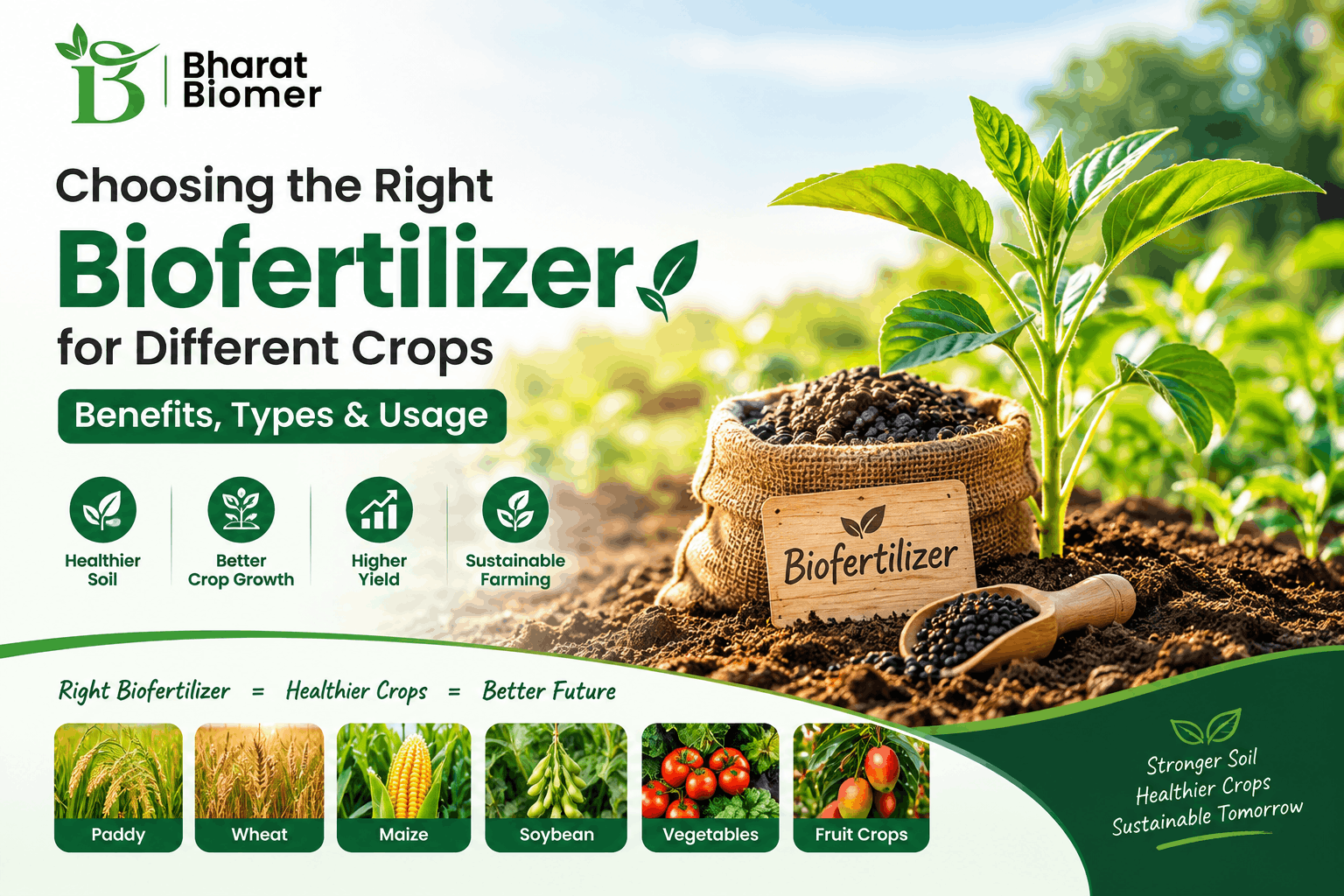
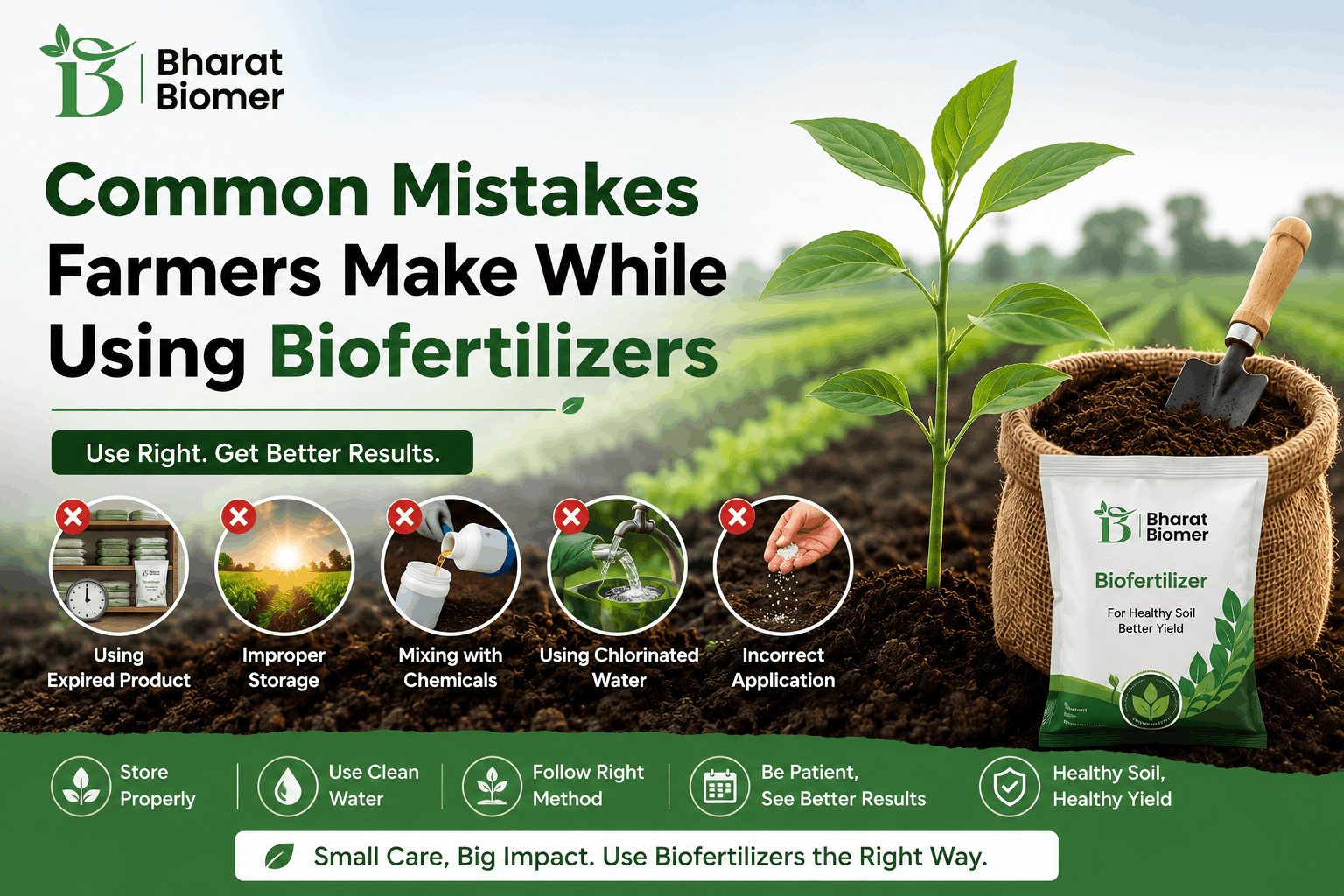
Role of Biofertilizers in Organic Farming
Biofertilizers are among the most important components of successful organic farming.
These beneficial microorganisms naturally improve nutrient availability and soil fertility without causing environmental damage.
Some commonly used biofertilizers include:
- Rhizobium
- Azotobacter
- Azospirillum
- Phosphate Solubilizing Bacteria (PSB)
- Potash Mobilizing Bacteria (KMB)
- Mycorrhiza
Why Biofertilizers Matter
- Improve nitrogen fixation
- Increase phosphorus availability
- Enhance root development
- Improve nutrient uptake
- Increase crop yield naturally
- Restore soil microbial activity
At Bharat Biomer Pvt. Ltd., we believe healthy soil is the foundation of successful farming. Our scientifically developed biofertilizers, biopesticides, and plant growth solutions are designed to help farmers improve crop productivity while supporting environmentally responsible agriculture. By combining innovation with sustainable farming practices, we help farmers move toward a healthier and more profitable future.
How to Start Organic Farming in India
Starting organic farming requires proper planning and gradual implementation.
Step 1: Test Your Soil
Understand soil fertility, nutrient status, and pH before cultivation.
Step 2: Select Suitable Crops
Choose crops that match your local climate and market demand.
Step 3: Improve Soil Naturally
Apply compost, farmyard manure, vermicompost, and quality biofertilizers.
Step 4: Follow Crop Rotation
Rotate crops to improve soil nutrients and reduce pest problems.
Step 5: Use Biological Pest Management
Replace chemical pesticides with eco-friendly biopesticides and integrated pest management techniques.
Step 6: Obtain Organic Certification
Certification helps build consumer trust and enables farmers to access premium markets.
Step 7: Build Market Connections
Sell through organic stores, farmer markets, online platforms, exporters, or direct consumers.
Future of Organic Farming in India
The future of organic farming in India looks highly promising. Growing health awareness, supportive government policies, expanding export markets, and increasing demand for residue-free food are creating new opportunities for farmers.
Advancements in biofertilizers, microbial technologies, precision agriculture, and sustainable crop nutrition are making organic farming more productive than ever before. As more farmers adopt eco-friendly practices, India is expected to become one of the world's leading producers of organic agricultural products.
Companies like Bharat Biomer Pvt. Ltd. are contributing to this transformation by providing reliable biofertilizers, biopesticides, and plant growth solutions that help farmers improve yields while protecting the environment. With the right technology and sustainable farming practices, Indian agriculture is well-positioned for long-term growth.