

Healthy soil is the foundation of productive farming. It provides essential nutrients, supports strong root development, and helps crops grow efficiently. However, continuous cultivation, excessive use of chemical fertilizers, and poor soil management can gradually reduce soil fertility. As soil health declines, crops become weaker, nutrient deficiencies increase, and yields begin to drop.
Recognizing these warning signs early is crucial for maintaining long-term productivity. Biofertilizers offer a natural and sustainable way to restore soil health by increasing beneficial microorganisms that improve nutrient availability and enhance soil fertility.
In this guide, you'll learn the most common signs that your soil needs biofertilizers and how they can help create healthier soil and stronger crops.
What Are Biofertilizers?
Biofertilizers are natural products containing beneficial microorganisms such as bacteria and fungi. These microorganisms improve soil fertility by fixing atmospheric nitrogen, solubilizing phosphorus, mobilizing essential nutrients, and enhancing the overall biological activity of the soil.
Unlike chemical fertilizers, biofertilizers work with nature to build healthier soil while supporting sustainable agricultural practices.
Signs Your Soil Needs Biofertilizers
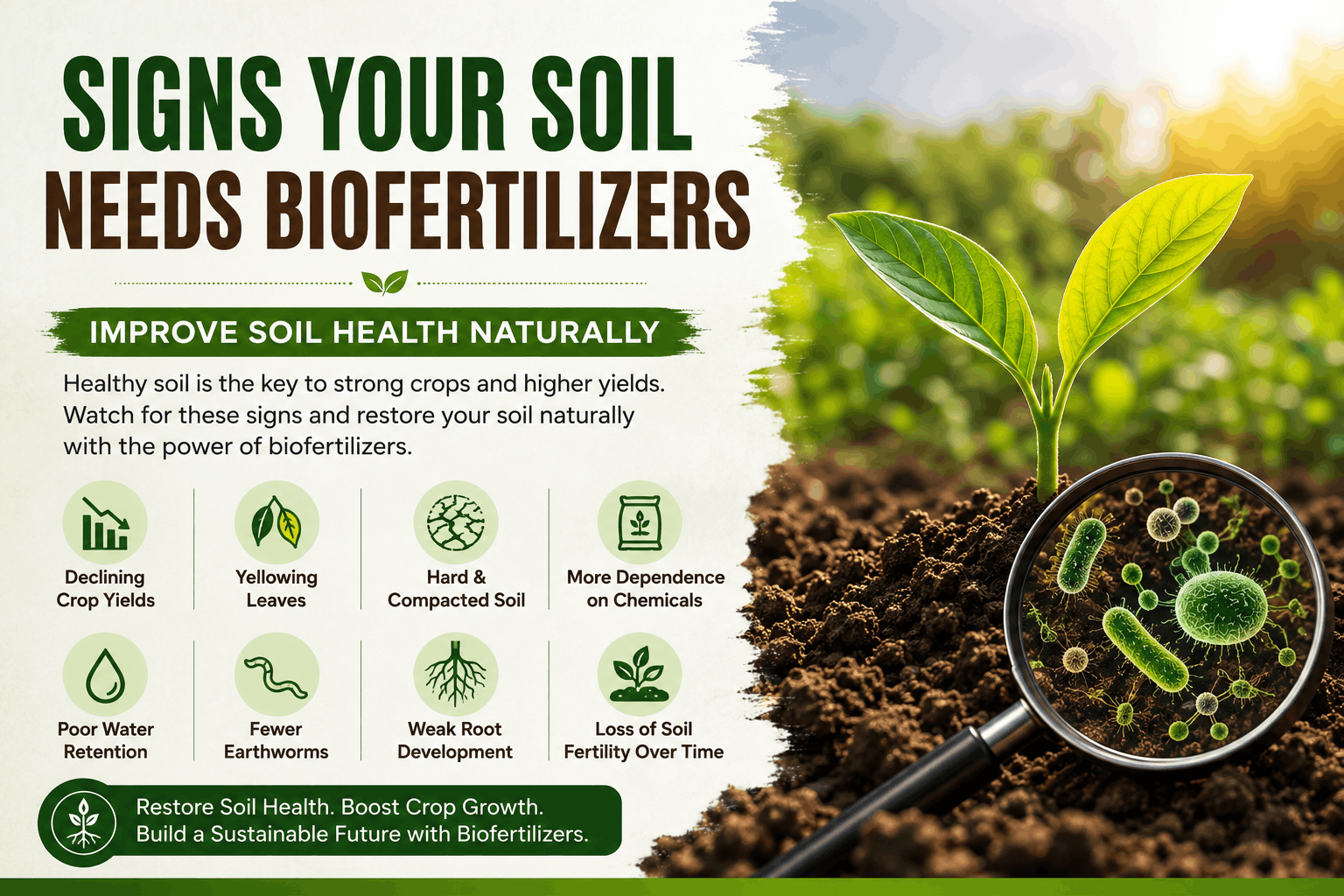
1. Declining Crop Yields
If your crop production continues to decrease despite using fertilizers and quality seeds, it may indicate declining soil fertility. Biofertilizers help restore beneficial microbial activity, improving nutrient availability and supporting healthier crop growth.
2. Frequent Nutrient Deficiencies
Yellow leaves, stunted growth, poor flowering, or weak fruit development are common symptoms of nutrient deficiency. Biofertilizers help unlock nutrients already present in the soil, making them more accessible to plants.
3. Hard or Compacted Soil
Healthy soil should be loose and well-aerated. Compacted soil restricts root growth, water movement, and nutrient absorption. Biofertilizers improve soil structure by increasing microbial activity, creating better conditions for plant roots.
4. Increased Dependence on Chemical Fertilizers
If you need higher doses of chemical fertilizers every season to achieve similar yields, your soil may have lost its natural biological balance. Biofertilizers help restore this balance by naturally improving nutrient cycling.
5. Poor Water Retention
Soil that dries quickly or experiences excessive water runoff often lacks sufficient organic matter and microbial activity. Biofertilizers contribute to better soil structure, helping the soil retain moisture more effectively.
6. Reduced Earthworm Activity
Earthworms are a strong indicator of healthy soil. If you notice fewer earthworms in your field, it may suggest declining biological activity. Biofertilizers encourage a healthier soil ecosystem that supports beneficial organisms.
7. Weak Root Development
Plants with shallow or underdeveloped roots struggle to absorb nutrients and water efficiently. Beneficial microorganisms in biofertilizers promote stronger root systems, leading to healthier and more resilient crops.
8. Loss of Soil Fertility Over Time
Even with proper farming practices, soil fertility can decline if biological activity is reduced. Regular application of biofertilizers helps maintain long-term soil health and sustainable productivity.
Benefits of Using Biofertilizers
Using biofertilizers offers several long-term benefits for both soil and crops:
- Improves soil fertility naturally
- Enhances nutrient availability
- Supports healthy root development
- Increases beneficial microbial activity
- Improves water-holding capacity
- Reduces dependence on chemical fertilizers
- Promotes sustainable farming practices
- Supports better crop growth and higher yields
Why Soil Health Matters
Healthy soil is more than just a growing medium. It is a living ecosystem that supports beneficial microorganisms responsible for nutrient cycling, organic matter decomposition, and plant growth. Maintaining soil health helps farmers achieve consistent yields while protecting the environment for future generations.
Why Choose Bharat Biomer?
Bharat Biomer Pvt. Ltd. is committed to helping farmers build healthier soils through innovative biological solutions. Our range of high-quality biofertilizers, biopesticides, and plant growth products is designed to improve soil fertility, increase crop productivity, and support sustainable agriculture. By combining scientific innovation with eco-friendly farming practices, we help farmers achieve healthier crops and long-term agricultural success.
Conclusion
Your soil often gives clear signals before productivity begins to decline. Poor crop growth, nutrient deficiencies, compacted soil, weak root systems, and increasing dependence on chemical fertilizers are all signs that your soil may benefit from biofertilizers.
By adopting biofertilizers as part of your nutrient management strategy, you can restore soil health, improve nutrient availability, and create a more sustainable farming system. Investing in healthy soil today ensures stronger crops, higher yields, and better farming outcomes for years to come.