
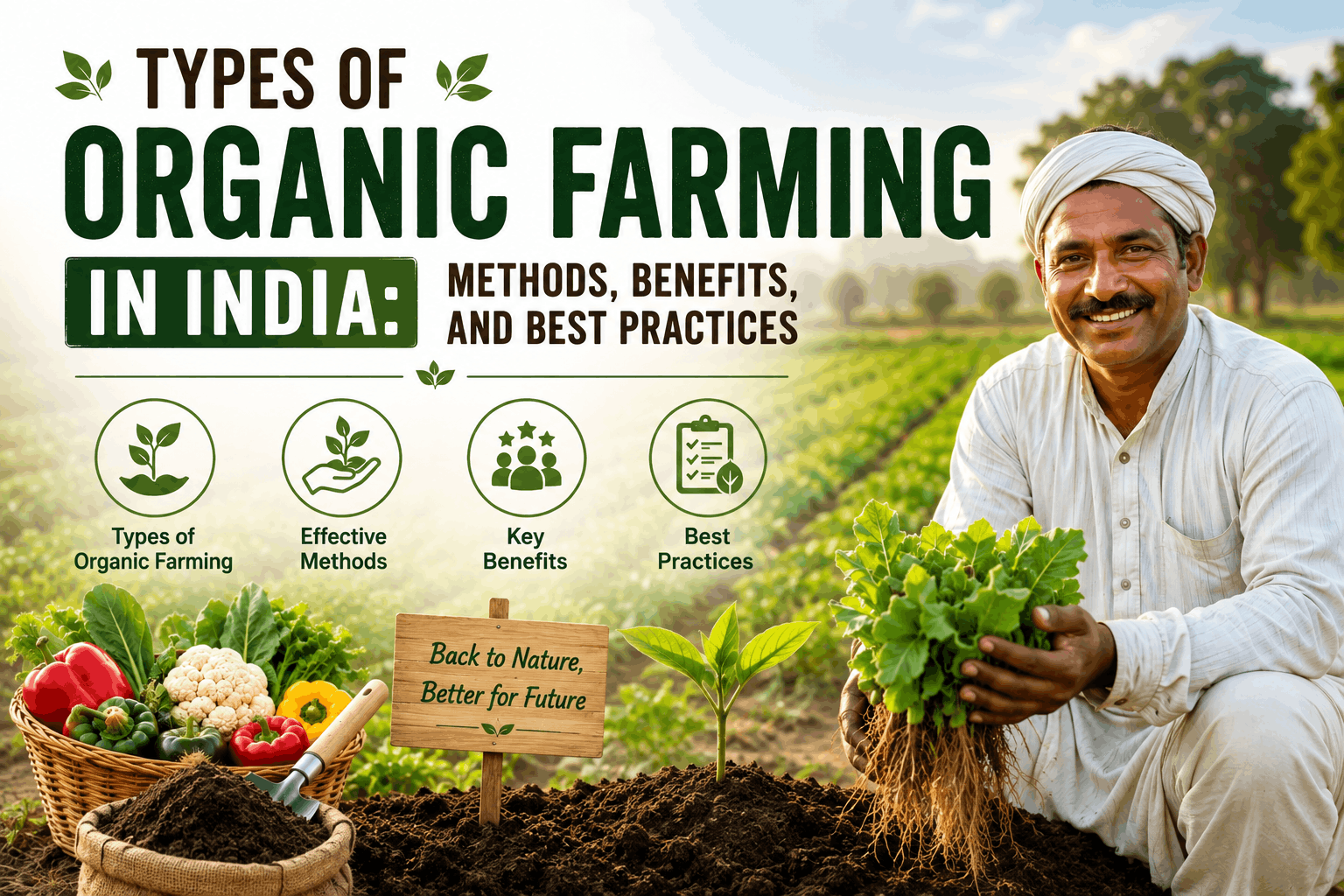
Organic farming is becoming an important part of Indian agriculture. As farmers look for safer and more sustainable ways to grow crops, many are moving away from chemical-based farming practices and adopting organic farming in India.
This farming method helps improve soil fertility, protect the environment, and support the production of healthy, chemical-free food. As awareness continues to grow, organic farming is creating new opportunities for farmers while promoting long-term agricultural sustainability.
What is Organic Farming?
Organic farming is a sustainable farming method that uses natural resources and eco-friendly practices to grow healthy crops. Instead of chemical fertilizers and pesticides, farmers use natural things like biofertilizers, biopesticides, and compost, and green manure to improve soil fertility and support plant growth. These natural farming practices help maintain soil health, protect the environment, and produce safe, high-quality food.
Today, organic farming in India is gaining popularity as more farmers understand its long-term benefits. It improves soil health, supports biodiversity, and helps produce healthier crops with fewer chemical inputs.
With the growing demand for organic products, farmers are actively looking for trusted agricultural partners who can help them adopt sustainable farming practices and achieve better crop productivity.
Types of Organic Farming
Understanding the different types of organic farming helps farmers choose the most suitable farming method based on their soil conditions, climate, crop requirements, and farming goals.
1. Pure Organic Farming
This method is completely free of chemical substances and relies on natural inputs, such as manure from farms, compost biofertilizers, biopesticides, and biofertilizers.
2. Integrated Organic Farming
Integrated organic farming combines crop cultivation, livestock management, composting, and other farm activities to make better use of available resources and improve farm profitability.
3. Natural Farming
Natural farming is focused on reducing external inputs and making use of local resources to improve the health of soil naturally.
4. Biodynamic Farming
This farming method combines organic practices with natural ecological principles to improve soil health, maintain long-term fertility, and support a balanced farming ecosystem.
These types of organic farming are becoming increasingly popular among farmers because they help improve soil health and support sustainable crop production.
Methods Used in Organic Farming
Achieving successful Organic Farming in India is based on a variety of established farming practices.
Crop Rotation
Crop rotation helps keep the soil healthy and reduces the chances of pests and diseases affecting crops.
Green Manuring
Green manuring involves growing specific crops and mixing them into the soil to increase organic matter and improve soil fertility naturally.
Biofertilizers
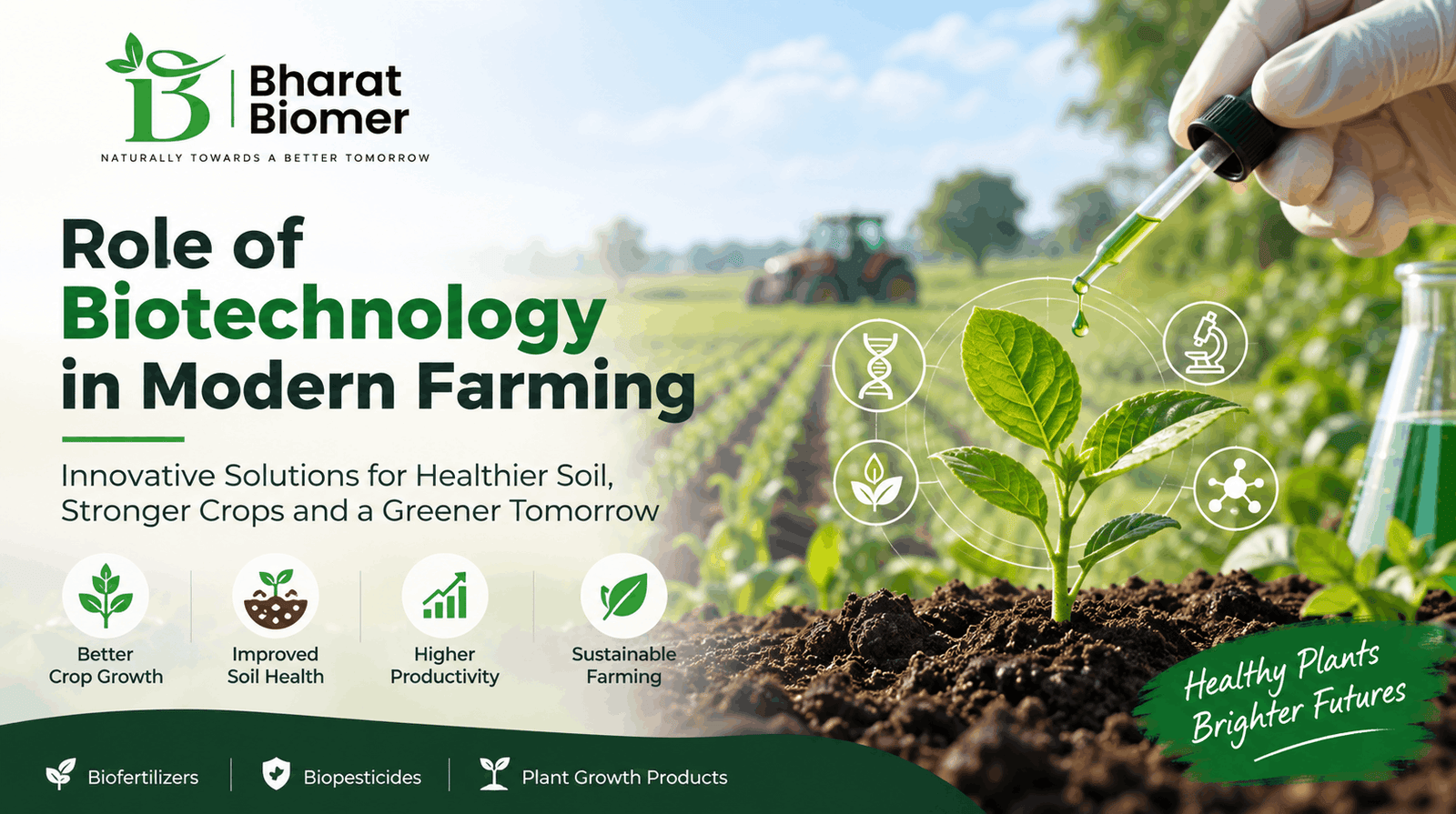
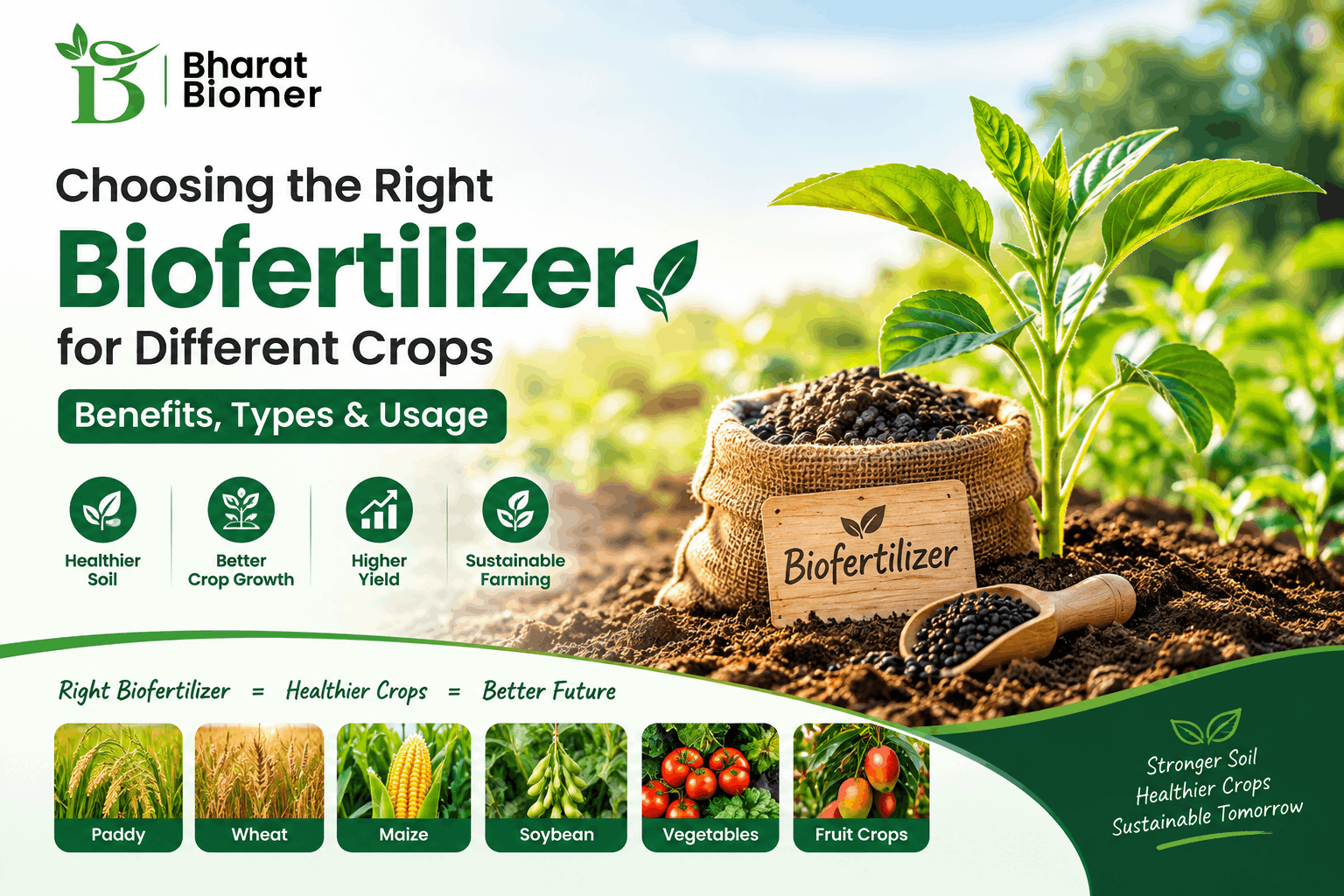
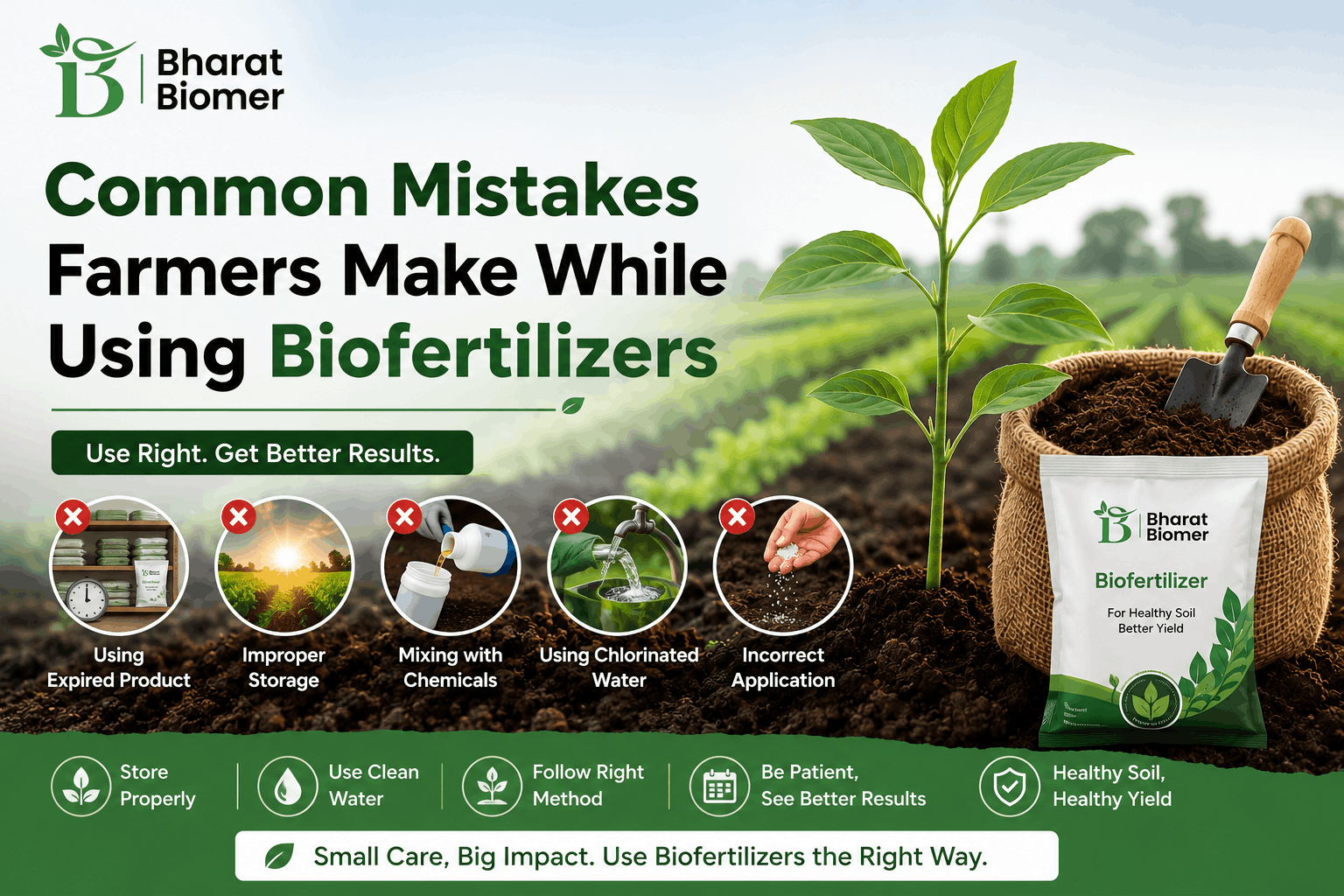
Biofertilizers contain beneficial microorganisms that naturally improve soil fertility and help plants absorb nutrients more effectively. They support healthy root development, promote better plant growth, and reduce the need for chemical fertilizers.
Several biofertilizer manufacturers, including Bharat Biomer and other agricultural input companies, offer biofertilizer products that help farmers improve soil fertility and support sustainable crop production.
Biopesticides
Biopesticides help protect crops from pests and diseases using natural ingredients. They are safer for the environment and help maintain ecological balance on the farm.
Composting
Composting is the process of turning organic waste into nutrient-rich manure. It helps improve soil health, increases water retention, and provides essential nutrients for healthy plant growth.
These organic farming practices help farmers improve crop growth, maintain soil fertility, and make Organic Farming in India more sustainable and environment friendly.
Benefits of Organic Farming
The growing acceptance of Organic Farming in India is due to its many benefits.
Improved Soil Health
Organic practices boost soil microbial activity, and also improve fertility over time.
Better Crop Quality
Organic food products are free of harmful chemical residues, and typically have a higher value on the market.
Environmental Sustainability
Organic farming helps protect natural resources, reduce environmental pollution, and preserve biodiversity for future generations.
Long-Term Productivity
Healthy soil results in stable crop performance and sustainable yields.
Reduced Chemical Dependency
Farmers can reduce their dependence on chemical fertilizers and pesticides by using bio-based agricultural solutions. These products help improve soil health, support healthy crop growth, and promote sustainable farming practices.
Many farmers trust Bharat Biomer for its high-quality biofertilizers, biopesticides, and plant growth products. These solutions help improve crop productivity while supporting environment friendly and profitable farming.
Organic Farming Setup Cost in India
One of the most common questions farmers ask is about the organic farming setup cost in India. The cost can vary depending on factors such as farm size, crop type, irrigation facilities, labor requirements, and the organic inputs needed for cultivation.
Understanding these factors can help farmers plan their investment and make a smooth transition to organic farming.
A typical organic farming setup cost in India typically includes:
-
Compost preparation and organic manure
-
Biofertilizers and biopesticides
-
Organic costs for certification
-
Infrastructure for irrigation
-
Costs of farm management and labor
Although the initial investment in organic farming may be higher during the transition phase, it can offer long-term benefits. Farmers can reduce input costs over time and often receive better prices for organic produce. Using quality biofertilizers, biopesticides, and other biological products can improve crop performance, increase yields, and make organic farming more profitable and sustainable.
Scope of Organic Farming in India
The scope of organic farming in India is growing rapidly as more people become aware of the importance of healthy food and environment friendly farming practices.
Several factors are contributing to the growing scope of organic farming in India, including:
-
Increasing demand for chemical-free and healthy food products
-
Strong government support for organic farming initiatives
-
Growing opportunities in domestic and international markets
-
Rising awareness of sustainable agricultural practices
-
Better availability of organic farming inputs such as biofertilizers and biopesticides
The future of organic farming in India looks promising, especially for farmers who want to adopt sustainable and eco-friendly farming practices. With the support of trusted agricultural brands like Varanash, Bharat Biomer & Devamrut Agrotech farmers can access high-quality biofertilizers, biopesticides, and plant growth products that help improve soil health and increase crop productivity naturally.
As awareness of healthy food and sustainable farming continues to grow, the scope of organic farming in India is expected to create new opportunities for farmers, agribusinesses, and rural communities across the country.
Why Farmers Trust Bharat Biomer
As more farmers choose Organic Farming in India, having the right agricultural partner becomes important. Bharat Biomer Pvt. Ltd. helps farmers improve crop growth with sustainable farming solutions, including biofertilizers, biopesticides, and plant growth products that support better yields and healthier soil.
The company provides:
-
High-quality biofertilizers
-
Effective biopesticides
-
Advanced plant growth promoters
-
Soil health improvement solutions
-
Sustainable crop management products
Through a combination of scientific innovation and environment friendly farming practices Bharat Biomer helps farmers to improve the health of their soils, boost production, and create a viable future of agriculture.
Conclusion
Organic Farming in India is helping farmers grow healthier crops while improving soil fertility and reducing dependence on chemical fertilizers and pesticides. As more farmers adopt sustainable farming practices, they can achieve better long-term productivity while protecting the environment.
By using natural farming methods and eco-friendly agricultural solutions, farmers can improve crop growth, maintain soil health, and contribute to a more sustainable future for agriculture.